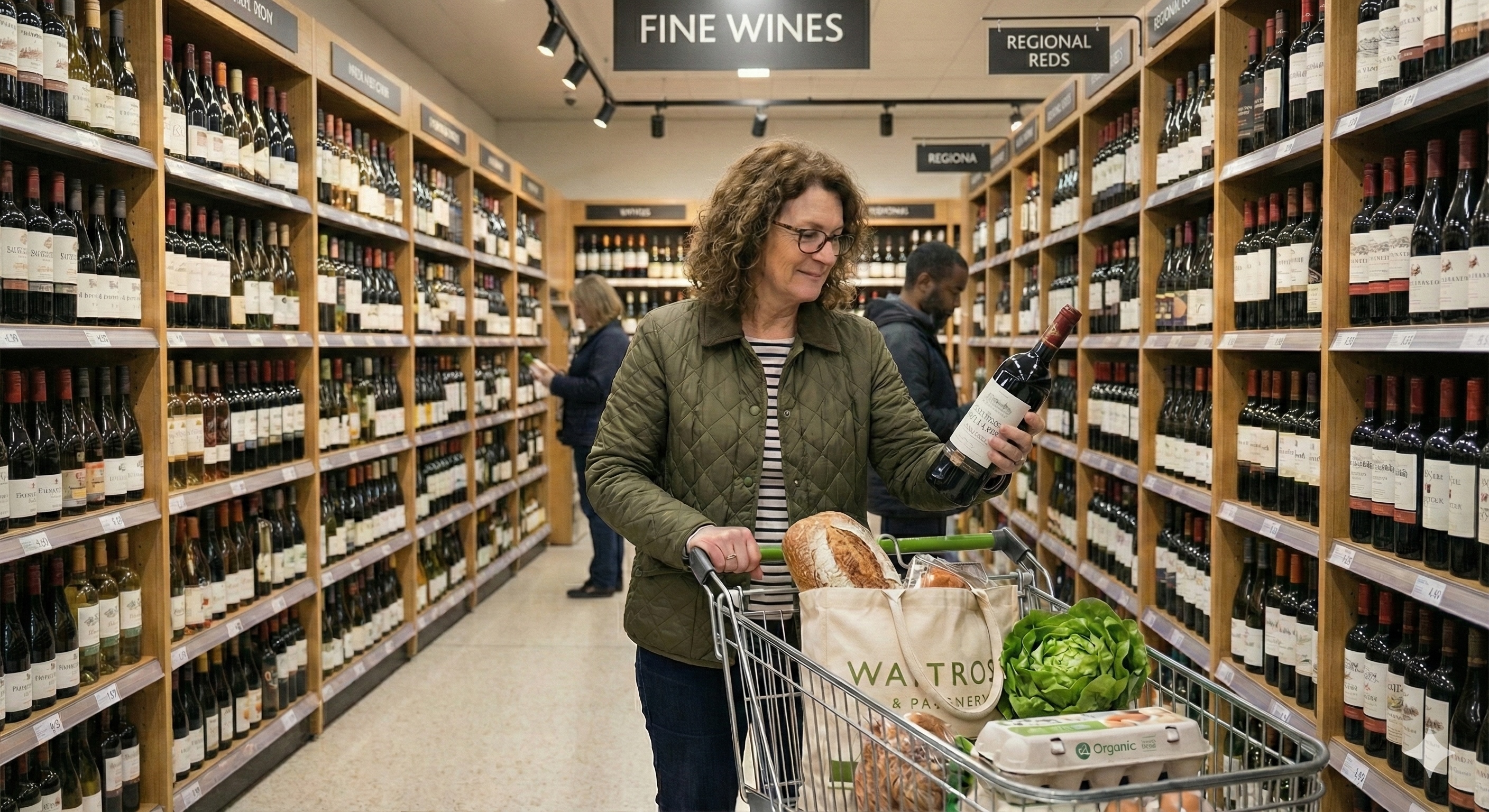
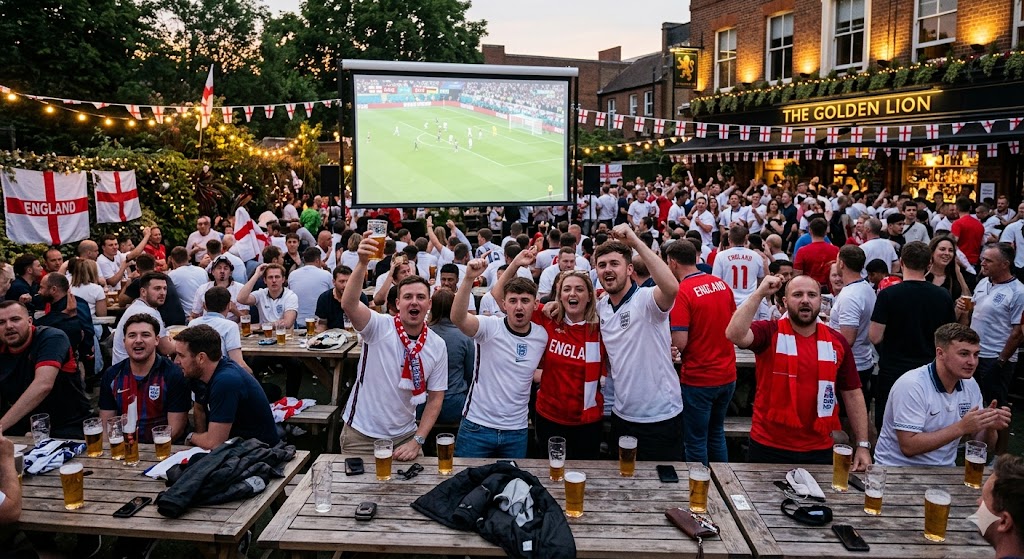
It's the unspoken truth of the drinks industry: sunshine sells. Most people working in the category know it instinctively - you feel it in the weekly numbers, you hear it in the boardroom when a cold June needs explaining. But it rarely gets quantified properly, and when it does, the scale of the effect is bigger than most people expect.
So here's the data. Most of the published research covers supermarket and pub sales, because that's where the long-run scanner data exists. But the same dynamics apply directly to DTC and ecommerce - and in some ways they're more actionable there. We'll come back to that specifically further down.
The Baseline: Temperature Is a Buying Signal
The most robust finding across multiple studies is a near-linear relationship between temperature and off-trade alcohol sales. A 2022 analysis published in the Journal of Business Research examining UK supermarket scanner data found that a 1°C rise in average weekly temperature was associated with a 3.4% increase in total alcohol unit sales at off-trade retailers. That effect compounded at higher temperatures: above 22°C, the elasticity increased to roughly 5.1% per degree.
Nielsen UK data (reported in The Grocer, 2023) showed similar directional findings. In weeks where mean temperature exceeded 20°C, off-trade alcohol volume was up 18–22% versus baseline, with the uplift concentrated in beer, cider, and white/rosé wine. Spirits showed a more modest but still meaningful 8–10% uplift.
The ONS and BBPA (British Beer and Pub Association) data point in the same direction for the on-trade. In the UK's record-breaking heatwave of July 2022, the BBPA reported pub beer sales ran approximately 40% above the equivalent week in 2021, with publicans crediting temperatures in the high 30s alongside the timing.
Category by Category: The Uplifts Are Not Uniform
Beer and Cider
Beer is the most weather-sensitive mainstream category. The research is consistent on this.
A landmark study by economists at the University of Exeter (Hajat & Kovats, 2014, expanded for beverage categories) found that lager and ale volume sales increased by approximately 6% for every 5°C temperature rise above a threshold of around 17°C. Below that threshold, the effect was negligible - people don't reach for cold lager on a grey 12°C Tuesday.
More granularly, a Dutch study (van Raaij & Verhallen, referenced in multiple European market analyses) found that on hot days (25°C+), beer accounted for a disproportionately high 60–65% of all spontaneous drinks purchases, versus around 45% in temperate conditions.
Craft beer follows the same pattern but with a geographic concentration effect: urban consumers shopping for premium craft skew strongly toward weekend weather events rather than sustained heat. Foot traffic data from off-licence and specialist retailers shows that a sunny Saturday generates 2.3x the craft beer impulse purchase volume of an equivalent rainy one (CGA Strategy UK data, 2022).
Cider tracks closely with beer in warm weather, but with an important nuance: apple cider over-indexes in spring and early summer (April–June), while fruit-flavoured ciders spike later and more sharply in heatwave conditions. Heineken's own analysis (published in their 2021 sustainability and business report) found that premium cider experienced peak-to-trough sales variance of nearly 300% driven almost entirely by weather seasonality.
Gin
Gin occupies an interesting middle ground. It's a spirits category but one that has increasingly behaved like a warm-weather drink in the UK - driven by the rise of premium garnished serves that photograph well and feel "outdoor-appropriate."
The data reflects this. IWSR (International Wine and Spirits Research) UK data shows that gin's off-trade volume uplift on warm weekends (20°C+) runs at approximately 12–15% versus a cold-equivalent weekend. That's lower than beer, but significantly higher than whisky or darker spirits, which show almost no weather correlation.
Fever-Tree, whose growth is closely correlated with premium gin culture, have been explicit in their investor communications about weather dependency. Their 2019 annual report noted that the UK's unusually warm summer of 2018 contributed to a £25m revenue outperformance versus internal forecasts - an extraordinary weather-driven delta for a mixer brand.
The gin category is also particularly sensitive to sunshine hours rather than just temperature. Analysis of Waitrose off-trade sales data (covered in The Grocer, 2020) found that gin sold significantly better during bright, low-cloud weekends even at temperatures that wouldn't otherwise be described as "hot" - the aesthetic of the serve matters as much as the temperature.
Wine: White and Still
White wine follows a temperature curve similar to gin - warm-weather responsive but not as dramatically as beer. The key threshold appears to be around 18–20°C, above which white wine impulse purchases increase meaningfully.
Wine Intelligence research (2021) found that UK consumers were 35% more likely to buy a bottle of white wine on a day with high sun index than on an equivalent grey day, even controlling for day of the week and seasonality. The effect was strongest in the 25–40 demographic and in premium price brackets (£10+).
Red wine shows almost no weather correlation and may slightly underperform in hot weather - consistent with consumption patterns where lighter, chilled serves dominate in the heat.
Rosé
Rosé is the standout case study in weather-driven category growth. The category's UK renaissance from roughly 2015 onwards is partly a product story, partly a cultural one - but the weather dependency baked into it is extreme.
WSTA (Wine and Spirit Trade Association) data consistently shows that rosé accounts for 30–40% of all still wine volume during the June–August period in the UK, compared to roughly 12–15% in October–March. That seasonal swing is almost entirely weather-driven rather than calendar-driven: in the cold, wet summer of 2012, rosé's share barely moved above its winter baseline.
The more granular finding is from a Kantar Worldpanel study (2022) showing that rosé wine is the category with the highest share of unplanned, weather-triggered purchase - ahead of beer, ahead of cider. The study found that 62% of rosé buyers on warm days had not planned to buy wine before entering the store. It is, functionally, the ultimate impulse category.
Per-degree temperature data for rosé is harder to isolate (most scanner data bundles it with white wine), but Wine Intelligence estimates suggest the uplift per degree above 20°C is in the range of 7–9% volume per degree - the highest of any wine category.
Spirits (Darker Spirits: Whisky, Rum, Bourbon)
This is where the weather story inverts. Darker spirits - whisky, rum, bourbon - show a neutral to mildly negative weather correlation. They are not cold-weather drinks in any dramatic sense, but neither do they benefit from sunshine.
IWSR data shows that whisky's weekly volume variance correlates more strongly with events (gifting occasions, sporting events, nights in) than with temperature. The same is broadly true of rum, although spiced rum in long-drink serves shows some summer uplift.
The exception is premium aged rum served over ice in cocktail-bar contexts, which has developed weather sensitivity as the category has traded up. But this is an on-trade, event-driven effect rather than an off-trade volume story.
Non-Alcoholic Drinks: The Faster Responders
Non-alcoholic drinks are, if anything, more weather-elastic than alcohol - the mechanism is more direct (hydration + refreshment versus mood/occasion). But within the non-alcoholic category, there are important distinctions.
Non-Alcoholic Beer and Spirits
This is now a large enough category to have its own weather data, and it tells a clear story: non-alcoholic beer sales rise with temperature almost as reliably as their alcoholic equivalents. IWSR's 2023 No and Low report found the week-by-week relationship between temperature and non-alcoholic beer volume is only marginally weaker than for standard beer - and that gap has narrowed year-on-year as the category grows and the occasions overlap.
Peroni Nastro Azzurro 0.0%, Heineken 0.0%, and Guinness 0.0% all show pronounced summer peaks in their Nielsen scanner data. Heineken's internal modelling (cited in trade press during their 2022 no-alcohol push) estimated that a bank holiday weekend at 22°C+ was worth approximately 3.5x the volume of a cold bank holiday for Heineken 0.0%.
Soft Drinks and Functional Beverages
The uplift data for soft drinks in warm weather is dramatic and well-documented. Britvic's annual soft drinks review consistently shows that carbonated soft drink volume in the UK is 40–50% higher in Q3 than Q1, with the majority of that variance attributable to temperature rather than underlying demand growth.
Energy drinks have their own dynamic: they are less weather-sensitive than traditional soft drinks, driven more by functional need (alertness, exercise) and occasion. Red Bull's internal market research (referenced in academic work on energy drink marketing) suggests that warm weather primarily shifts the format purchased (cans over bottles, cold-ready SKUs) rather than dramatically lifting total volume.
Kombuchas, botanical waters, and functional soft drinks - the emerging premium non-alcoholic segment - show weather sensitivity that closely mirrors premium soft drinks but with a meaningfully higher impulse-to-planned-purchase ratio. These are still-evolving categories where the weather elasticity data is building, but early signals from retailer scanner data (reported in category reviews, 2023) suggest premium non-alcoholic drinks track warm weather patterns at roughly 1.5x the rate of mainstream soft drinks in higher-income demographic baskets.
The Summer Weekend Effect: Beyond Temperature
Temperature alone doesn't tell the full story. Research consistently shows that the interaction of temperature, sunshine hours, and day-of-week creates non-linear spikes.
A Nielsen meta-analysis of UK FMCG data found that a warm sunny Bank Holiday weekend (22°C+, 8+ sunshine hours) outperformed a warm weekday at equivalent temperature by approximately 3.2x in off-trade drinks volume. The occasion unlocking is as important as the thermometer reading.
This has direct implications for media timing. If you're running paid social or retail media for your drinks brand, the reactive media window - scheduling spend to go live on Thursday ahead of a weekend forecast above 20°C - is measurably more efficient than static scheduling. Analysis by Essence MediaCom (published in WARC, 2021) found that weather-triggered paid social activation for FMCG drinks brands delivered 23% lower CPA than equivalent non-weather-triggered spend, controlling for creative quality.
What This Means for DTC and Ecommerce
The off and on-trade data above is useful context, but for drinks brands selling direct - whether through their own website or via online grocery - the weather signal is arguably more valuable, because you can actually do something about it in real time.
When temperatures rise, people don't just buy more drinks in shops. They search for them online. Google Trends data for category terms like "rosé wine delivery," "non alcoholic beer," and "craft gin" shows clear, repeatable spikes that track closely with warm weather windows - often beginning on Wednesday or Thursday as people start planning their weekends. For a DTC brand with paid search running, that's a live demand signal you can respond to.
The same is true of retail media on grocery platforms. Onsite search on the major online grocers behaves like Google: intent is high, the purchase is one click away, and the consumer is already in buying mode. When it's 24°C and someone searches "sparkling rosé" on a grocery platform, they are not browsing - they are buying. Brands that surge their bids and budgets into those windows convert that intent efficiently. Brands that don't hand the visibility to whoever is willing to spend.
There's also a website traffic dimension that's less obvious. Analysis of DTC drinks brand traffic patterns shows that warm weekends generate meaningful spikes in direct and organic visits - people who've seen a brand on social or in a shop and are now going to look it up. If your site isn't converting that traffic well (slow load, weak above-the-fold offer, no urgency mechanic), the weather is doing half the job and your website is dropping it.
The practical implication is that DTC brands should think about weather the same way retailers think about promotions: as a predictable, forecastable event that you can prepare for. Met Office forecasts are free. A warm weekend is visible four to five days out. There's no reason to be caught flat-footed.
What This Means for Campaign Planning
The research points to a few clear strategic implications:
1. Category-specific thresholds matter. Beer and cider begin responding meaningfully above 17–18°C. Rosé and white wine kick in at 19–20°C. Gin follows sunshine hours as much as temperature. Plan your media triggers by category, not by a single weather rule.
2. The impulse purchase window is short. Most weather-driven uplift is captured within 48–72 hours of the trigger (the warm weekend itself). Awareness campaigns need to pre-load before forecast windows; conversion activity needs to be timed to the window.
3. Non-alcoholic brands can own the same moments. The misconception is that non-alcoholic drinks are a cold-weather or health-conscious occasion. The data says otherwise: the same summer occasions that drive beer and rosé volume are driving premium non-alcoholic growth, often to the same shopper in the same basket.
4. Retail media is uniquely suited to weather activation. Onsite sponsored search on grocery platforms allows brands to surge bids and budget during high-intent weather windows - when consumers searching "rosé wine" or "non alcoholic beer" are doing so because it's 24°C outside. This is the most direct path from weather signal to purchase.
A Note on Sources
The data cited here draws on published research from: IWSR, Kantar Worldpanel, Nielsen UK (via trade press), CGA Strategy, Wine Intelligence, WSTA, BBPA, Britvic's annual Soft Drinks Review, and academic work published in the Journal of Business Research and public health economics literature. Where specific figures are drawn from proprietary brand reports, these are noted.
Weather elasticity modelling is a live and growing area of FMCG analytics, and the figures above represent current best estimates rather than universal constants - category dynamics, distribution footprint, and brand-specific factors all apply.