
Latest news & updates
Our thoughts and processes, in plain English.
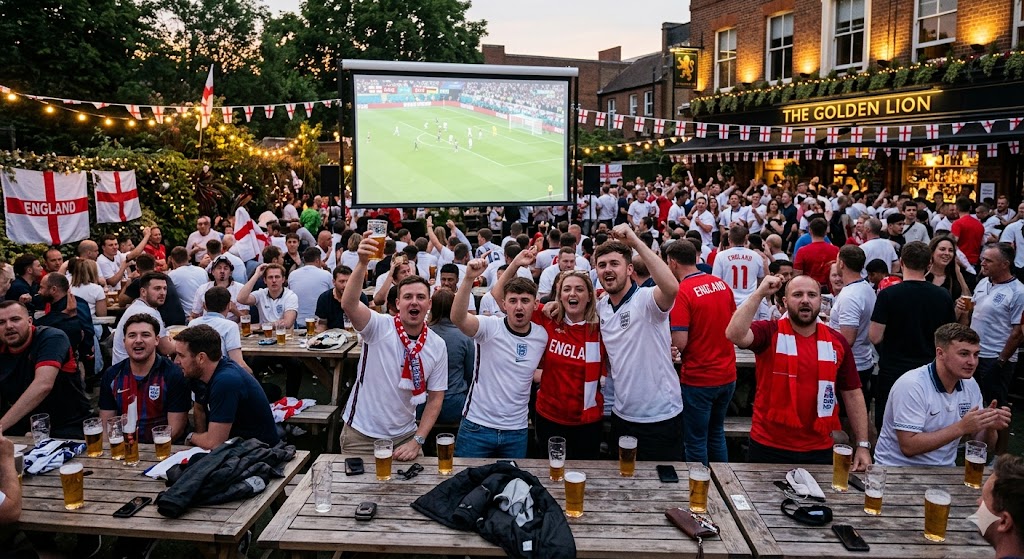
The FIFA World Cup kicks off in two days. England's first game is Wednesday 17th June against Croatia - 9pm UK time, a warm summer evening, revenge narrative built in. If you work in drinks marketing and you're not thinking about this right now, you should be.
But before you dust off the 2018 playbook and call it a strategy, it's worth understanding what the data actually says about World Cup uplifts, which categories win, and what's genuinely different about this tournament.
📅 England's Schedule Is Better Than You'd Think
The fear with a US-hosted tournament was brutal West Coast kick-offs landing at 2am UK time. The reality is more manageable.
England's group stage looks like this:
- Wednesday 17 June - England vs Croatia, 9pm UK
- Tuesday 23 June - England vs Ghana, 9pm UK
- Friday 27 June - Panama vs England, 10pm UK
All three are evening kick-offs. All three are viable pub occasions. All three fall in the height of British summer. On paper, the conditions for a commercial uplift are genuinely good - not quite 2018, but closer to it than anyone was expecting when the tournament draw came out.
The caveat: if England progress deep into the knockout rounds and games shift to West Coast venues, later kick-offs become more likely. But for now, the group stage is workable.
🏆 What 2018 Actually Looked Like in the Data
Russia 2018 is the benchmark everyone in drinks references, and rightly so. England reached the semi-finals, most games kicked off between 3pm and 7pm UK time, and the summer was one of the hottest on record. Everything aligned.
The BBPA reported pub beer sales during England's run to the semi-finals were up 25-30% versus equivalent weeks. The England v Sweden quarter-final alone generated an estimated additional £30m in on-trade beer sales. The Croatia semi-final - a 7pm Wednesday kick-off on a warm evening - reportedly drove the highest single-night pub sales many venues had seen outside New Year's Eve.
Off-trade figures were equally strong. Nielsen data reported by the WSTA showed beer and cider volume running 20-25% above baseline during the tournament, concentrated in the weeks England were still competing. When England went out on 11th July, the uplift dropped almost immediately.
The key thing about 2018: the time zones were helpful, the weather was exceptional, and England went all the way to the semi-finals. You're not going to get all three of those again. But 2026 has a decent shot at two of them.
❄️ What 2022 Taught Us About Unusual Conditions
Qatar 2022 was a genuinely useful data point because it removed variables that are normally bundled together.
The winter tournament (November-December) killed the weather-driven occasion entirely. No garden viewing parties, no warm evenings, no impulse purchases on the way home from work in the sunshine. The on-trade saw lower footfall than a summer equivalent. Off-trade uplift was more modest.
But kick-off times were actually fine - 1pm, 4pm, 7pm and 10pm UK slots. What suppressed sales wasn't the viewing time. It was the cold weather stripping out the outdoor occasion that makes summer football so commercially powerful for drinks brands.
The WSTA reported overall alcohol sales up approximately 10-12% during the 2022 tournament - real uplift, but well below 2018, and driven by a different product mix. Wine and spirits held up because the occasion shifted to sofa-and-screen. Beer and cider underperformed because their occasion - outdoors, warm, social - simply wasn't there.
The takeaway: weather and football are two separate multipliers. When they stack, as they did in 2018, the commercial effect is extraordinary. When you get one without the other, the uplift is real but more modest.
☀️ 2026: Summer Football Is Back. Use It.
This tournament has what 2022 didn't - a summer backdrop. June and July in the UK, England playing evening games, outdoor occasions back on the table. For beer, cider, rosé, gin and premium soft drinks, the seasonal conditions alone are worth planning around, regardless of England's results.
The most commercially significant variable is still England's run. The 2018 data makes clear that the multiplier effect kicks in properly once England are in the knockout rounds and the nation is genuinely invested. A group stage exit changes the picture significantly - you'd be left with a decent summer and not much else.
The realistic uplift scenarios:
If England exit at the group stage: expect a modest 5-8% uplift across the tournament period, driven primarily by summer weather rather than football occasions. Category winners are rosé, white wine and gin - summer staples that don't need a sporting event.
If England reach the last 16 or quarters: 12-18% uplift on beer and cider, stronger cross-category performance, meaningful on-trade lift on match nights. This is the most likely outcome and the scenario worth planning your media around.
If England go deep - semis or final: the 2018 dynamic reasserts itself. You're looking at 20%+ uplift on beer and cider, a national conversation that touches every category, and the kind of demand surge that catches unprepared brands short on stock.
🍺 Category by Category
Beer and cider are the most directly World Cup-sensitive categories. The 9pm kick-offs are pub-viable and the summer conditions restore the outdoor occasion. If England progress, expect the strongest uplift of any category. If they don't, beer still benefits from the summer backdrop - just not the football premium on top.
Rosé and white wine will perform well regardless of England's results. These are summer categories driven more by warm evenings than sporting occasions. A 9pm kick-off that sends people to the pub garden is just as good a rosé moment as any other summer evening.
Gin follows a similar pattern - sunshine hours matter more than the scoreline. The premium long-serve occasion is alive in June and July whether England win or lose.
Spirits (darker) - whisky, rum, bourbon - show minimal World Cup correlation. They're not occasion-sensitive in the same way. Don't expect meaningful uplift and don't blow your budget trying to engineer it.
Non-alcoholic drinks are the interesting story this tournament. The category has grown substantially since 2018 and the consumer base is now large enough to generate real volume data. Non-alcoholic beer in particular tracks summer occasions almost as closely as its alcoholic equivalent. Someone watching England at the pub who isn't drinking alcohol is now almost certainly reaching for a Guinness 0.0 or a Peroni 0.0 rather than a soft drink - and that's a meaningful commercial shift from even four years ago. Non-alcoholic brands should be treating this tournament as a proper planning occasion, not an afterthought.
Soft drinks and energy drinks benefit from both the summer conditions and the viewing occasions. Consistent uplift expected across the tournament, accelerating if England progress and the national mood picks up.
📱 What DTC Brands Should Actually Do
The temptation is to build a big World Cup campaign and let it run. That's the wrong approach. The commercial opportunity is concentrated and predictable - match nights, warm weekends, England's knockout games if they get there - and the media strategy should match that concentration.
Match day is the buying window, not kick-off time. Someone who's watching a 9pm game has already bought their drinks by 6pm. The decision happens in the supermarket or online in the afternoon. Off-trade and DTC purchase activity spikes mid-afternoon on match days, not at 8:45pm. Time your media to the purchase moment, not the broadcast.
React to England's results in real time. Winning breeds buying. The morning after an England win, search intent and social engagement spike. Having reactive creative ready and budget available to deploy is worth more than any pre-planned campaign. Set up the trigger now so you can move fast when it matters.
Weight your spend to the games that matter. The Croatia opener on 17th June is the highest-value game of the group stage commercially - it's the one that sets the mood for the tournament, the one with the strongest media coverage, and the one where consumer intent to make it an occasion is highest. Back it accordingly.
Don't wait for knockout rounds to start planning. The brands that win commercially in tournaments are the ones who are already in consumers' consideration before the first ball is kicked. Get your creative live now.
🎯 The Honest Forecast
2026 isn't 2018. Don't plan as if it is. But it's a summer tournament with viable UK kick-off times and England in reasonable shape. The baseline conditions are genuinely positive.
The weather and the football are your two variables. You can't control either of them, but you can plan around both - and that planning is exactly what separates brands that capitalise on the next six weeks from the ones who look at their July numbers and wonder what happened.
Pints In. It's Coming Home (Maybe). Here's What the World Cup Actually Does to Drink Sales.
The FIFA World Cup kicks off in two days. England's first game is Wednesday 17th June against Croatia - 9pm UK time, a warm summer evening, revenge narrative built in. If you work in drinks marketing and you're not thinking about this right now, you should be.
But before you dust off the 2018 playbook and call it a strategy, it's worth understanding what the data actually says about World Cup uplifts, which categories win, and what's genuinely different about this tournament.
📅 England's Schedule Is Better Than You'd Think
The fear with a US-hosted tournament was brutal West Coast kick-offs landing at 2am UK time. The reality is more manageable.
England's group stage looks like this:
- Wednesday 17 June - England vs Croatia, 9pm UK
- Tuesday 23 June - England vs Ghana, 9pm UK
- Friday 27 June - Panama vs England, 10pm UK
All three are evening kick-offs. All three are viable pub occasions. All three fall in the height of British summer. On paper, the conditions for a commercial uplift are genuinely good - not quite 2018, but closer to it than anyone was expecting when the tournament draw came out.
The caveat: if England progress deep into the knockout rounds and games shift to West Coast venues, later kick-offs become more likely. But for now, the group stage is workable.
🏆 What 2018 Actually Looked Like in the Data
Russia 2018 is the benchmark everyone in drinks references, and rightly so. England reached the semi-finals, most games kicked off between 3pm and 7pm UK time, and the summer was one of the hottest on record. Everything aligned.
The BBPA reported pub beer sales during England's run to the semi-finals were up 25-30% versus equivalent weeks. The England v Sweden quarter-final alone generated an estimated additional £30m in on-trade beer sales. The Croatia semi-final - a 7pm Wednesday kick-off on a warm evening - reportedly drove the highest single-night pub sales many venues had seen outside New Year's Eve.
Off-trade figures were equally strong. Nielsen data reported by the WSTA showed beer and cider volume running 20-25% above baseline during the tournament, concentrated in the weeks England were still competing. When England went out on 11th July, the uplift dropped almost immediately.
The key thing about 2018: the time zones were helpful, the weather was exceptional, and England went all the way to the semi-finals. You're not going to get all three of those again. But 2026 has a decent shot at two of them.
❄️ What 2022 Taught Us About Unusual Conditions
Qatar 2022 was a genuinely useful data point because it removed variables that are normally bundled together.
The winter tournament (November-December) killed the weather-driven occasion entirely. No garden viewing parties, no warm evenings, no impulse purchases on the way home from work in the sunshine. The on-trade saw lower footfall than a summer equivalent. Off-trade uplift was more modest.
But kick-off times were actually fine - 1pm, 4pm, 7pm and 10pm UK slots. What suppressed sales wasn't the viewing time. It was the cold weather stripping out the outdoor occasion that makes summer football so commercially powerful for drinks brands.
The WSTA reported overall alcohol sales up approximately 10-12% during the 2022 tournament - real uplift, but well below 2018, and driven by a different product mix. Wine and spirits held up because the occasion shifted to sofa-and-screen. Beer and cider underperformed because their occasion - outdoors, warm, social - simply wasn't there.
The takeaway: weather and football are two separate multipliers. When they stack, as they did in 2018, the commercial effect is extraordinary. When you get one without the other, the uplift is real but more modest.
☀️ 2026: Summer Football Is Back. Use It.
This tournament has what 2022 didn't - a summer backdrop. June and July in the UK, England playing evening games, outdoor occasions back on the table. For beer, cider, rosé, gin and premium soft drinks, the seasonal conditions alone are worth planning around, regardless of England's results.
The most commercially significant variable is still England's run. The 2018 data makes clear that the multiplier effect kicks in properly once England are in the knockout rounds and the nation is genuinely invested. A group stage exit changes the picture significantly - you'd be left with a decent summer and not much else.
The realistic uplift scenarios:
If England exit at the group stage: expect a modest 5-8% uplift across the tournament period, driven primarily by summer weather rather than football occasions. Category winners are rosé, white wine and gin - summer staples that don't need a sporting event.
If England reach the last 16 or quarters: 12-18% uplift on beer and cider, stronger cross-category performance, meaningful on-trade lift on match nights. This is the most likely outcome and the scenario worth planning your media around.
If England go deep - semis or final: the 2018 dynamic reasserts itself. You're looking at 20%+ uplift on beer and cider, a national conversation that touches every category, and the kind of demand surge that catches unprepared brands short on stock.
🍺 Category by Category
Beer and cider are the most directly World Cup-sensitive categories. The 9pm kick-offs are pub-viable and the summer conditions restore the outdoor occasion. If England progress, expect the strongest uplift of any category. If they don't, beer still benefits from the summer backdrop - just not the football premium on top.
Rosé and white wine will perform well regardless of England's results. These are summer categories driven more by warm evenings than sporting occasions. A 9pm kick-off that sends people to the pub garden is just as good a rosé moment as any other summer evening.
Gin follows a similar pattern - sunshine hours matter more than the scoreline. The premium long-serve occasion is alive in June and July whether England win or lose.
Spirits (darker) - whisky, rum, bourbon - show minimal World Cup correlation. They're not occasion-sensitive in the same way. Don't expect meaningful uplift and don't blow your budget trying to engineer it.
Non-alcoholic drinks are the interesting story this tournament. The category has grown substantially since 2018 and the consumer base is now large enough to generate real volume data. Non-alcoholic beer in particular tracks summer occasions almost as closely as its alcoholic equivalent. Someone watching England at the pub who isn't drinking alcohol is now almost certainly reaching for a Guinness 0.0 or a Peroni 0.0 rather than a soft drink - and that's a meaningful commercial shift from even four years ago. Non-alcoholic brands should be treating this tournament as a proper planning occasion, not an afterthought.
Soft drinks and energy drinks benefit from both the summer conditions and the viewing occasions. Consistent uplift expected across the tournament, accelerating if England progress and the national mood picks up.
📱 What DTC Brands Should Actually Do
The temptation is to build a big World Cup campaign and let it run. That's the wrong approach. The commercial opportunity is concentrated and predictable - match nights, warm weekends, England's knockout games if they get there - and the media strategy should match that concentration.
Match day is the buying window, not kick-off time. Someone who's watching a 9pm game has already bought their drinks by 6pm. The decision happens in the supermarket or online in the afternoon. Off-trade and DTC purchase activity spikes mid-afternoon on match days, not at 8:45pm. Time your media to the purchase moment, not the broadcast.
React to England's results in real time. Winning breeds buying. The morning after an England win, search intent and social engagement spike. Having reactive creative ready and budget available to deploy is worth more than any pre-planned campaign. Set up the trigger now so you can move fast when it matters.
Weight your spend to the games that matter. The Croatia opener on 17th June is the highest-value game of the group stage commercially - it's the one that sets the mood for the tournament, the one with the strongest media coverage, and the one where consumer intent to make it an occasion is highest. Back it accordingly.
Don't wait for knockout rounds to start planning. The brands that win commercially in tournaments are the ones who are already in consumers' consideration before the first ball is kicked. Get your creative live now.
🎯 The Honest Forecast
2026 isn't 2018. Don't plan as if it is. But it's a summer tournament with viable UK kick-off times and England in reasonable shape. The baseline conditions are genuinely positive.
The weather and the football are your two variables. You can't control either of them, but you can plan around both - and that planning is exactly what separates brands that capitalise on the next six weeks from the ones who look at their July numbers and wonder what happened.

Why Facebook and Instagram Ads Will Never Be Cheaper Than They Are Now – Especially for Drinks Brands
For anyone marketing a drinks brand—whether that’s wine, spirits, mixers, or kombucha—there’s one uncomfortable truth you can’t afford to ignore...
Facebook and Instagram ads will never be cheaper than they are today.
Over the past few years, the cost of reaching your ideal customer has risen steadily. And for the drinks industry, where competition is fierce and margins are tight, every penny counts.
Let’s break down why Meta advertising costs are climbing, how it affects drinks brands specifically, and why now is the time to double down on your strategy before it becomes even more expensive.
🎯 1. Interest Targeting is Being Removed—Hurting Niche Drinks Brands the Most
One of the big appeals of Meta advertising used to be precise interest targeting. You could reach gin lovers, wine subscribers, cocktail connoisseurs, or people interested in zero-alcohol alternatives with incredible accuracy.
But Meta has gradually removed hundreds of interest categories, especially those around alcohol, health, and lifestyle. If you're marketing something like:
- A natural wine subscription
- A low-calorie RTD cocktail
- A functional sparkling tea
…you’ve probably noticed that your audience options have shrunk. Without granular targeting, it’s harder to reach cold audiences that actually care about your category.
This shift especially hurts early-stage brands who rely on interest targeting to build awareness. Instead, Meta is pushing everyone toward broader targeting, which often leads to higher CPAs and more wasted spend—unless you’ve got the budget to let the algorithm learn over time.
🍷 2. The Drinks Space is Getting Crowded on Meta
We’re seeing more and more drinks brands entering the paid social space, from craft spirits to challenger soft drinks. And they’re not just competing against each other—they’re up against food brands, fashion, tech, and beyond.
Because Meta operates on an auction-based system, this growing competition means:
- CPMs (cost per 1,000 impressions) continue to rise.
- You’re paying more just to get seen in-feed.
- Smaller brands are being priced out of top-performing placements.
We’ve seen CPMs for drinks campaigns rise from £6–£8 in 2022 to £12–£16 in 2025, depending on the segment and creative format. That’s a 100%+ increase in just a few years.
If you're running an awareness campaign for a new flavoured gin or launching your canned spritz range for summer, you're likely paying significantly more to generate the same number of impressions than you would have 18 months ago.
📈 3. Year-on-Year Increases in CPMs Are the New Normal
For drinks brands, the average CPM is rising fast. Here’s what we’ve seen across our client base:
- 2022: £6–£8 CPM for most alcohol and premium soft drink ads
- 2023: £9–£12 CPM range became common
- 2024–25: £12–£16 CPM, even higher in Q4
And that’s before you even get to key trading periods like Christmas or Dry January, when demand for ad space spikes.
Brands who wait until peak times to run ads—without already having tested creative and audiences—often find themselves paying 30–50% more per impression than competitors who planned earlier and locked in learnings.
🔐 4. Privacy Changes Make Attribution Harder (and More Expensive)
With iOS14+ and GDPR in full swing, drinks brands are now flying partially blind. Whether you're promoting a direct-to-consumer discovery box or a zero-sugar energy drink, it's harder to tell which ads are actually converting.
This means:
- ROAS appears lower, making it harder to optimise
- CPAs rise, as spend is spread more thinly across testing
- Brands must invest in things like server-side tracking and Conversion APIs to get visibility back
In a high-volume, low-margin category like drinks, that’s a tough pill to swallow. Without accurate attribution, it’s easy to underinvest in ads that are actually working, or worse, over-invest in poor performers.
🚨 Why Drinks Brands Should Act Now
Here’s the thing—paid social still works for drinks. When done well, Facebook and Instagram ads can:
- Grow your subscriber base
- Drive DTC sales at scale
- Launch new SKUs with speed and impact
But the window for low-cost testing is closing.
If you’re sitting on a product launch, planning to grow your DTC arm, or trying to hit subscription targets before your next funding round—now is the lowest cost it’s going to be.
🥡 Key Takeaways for Drinks Marketers
- Don’t wait for CPMs to go back down—they won’t.
- Start testing broad audiences and creative formats now while costs are still manageable.
- Focus on building first-party data (email, SMS, pixel audiences) to protect future reach.
- If you haven’t already, invest in conversion tracking upgrades (e.g., Meta's CAPI) to keep attribution strong.
Final Thought
As a drinks brand in the digital world, you’re not just marketing a product—you’re battling against rising costs, limited targeting, and a crowded marketplace. But those who act now—who test, learn, and build an ad infrastructure while CPMs are still (relatively) low—will be the ones with the edge this time next year.
Because whether you’re pushing premium rum or functional soda, one thing’s for sure:
Facebook and Instagram ads will never be this low cost again.
The Secret Sauce to Boosting Sales In Supermarkets
If you’re a drinks brand looking to grow sales through major grocery retailers, there’s one marketing channel you can’t afford to ignore...
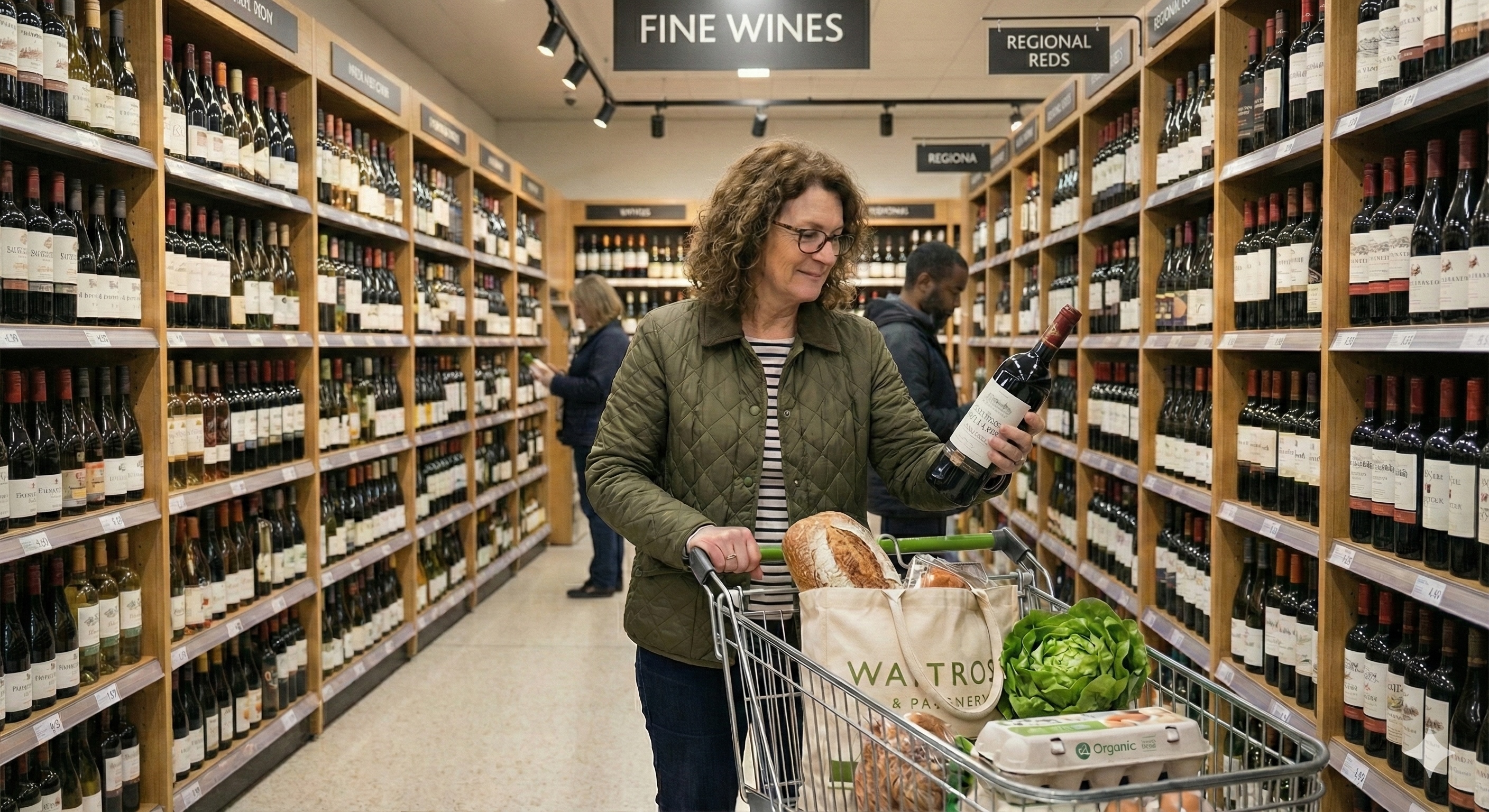
👉 Sponsored product ads on retail media platforms like Ocado, Waitrose, and Sainsbury’s (Nectar360).
These platforms allow your brand to appear in the exact moment a customer is searching for drinks, whether it’s sparkling wine, zero-alcohol beer, or premium mixers. And with the right setup, they can deliver serious performance: high-intent visibility, measurable returns, and full-funnel impact.
In this article, we’ll break down:
- What sponsored product ads are
- How they work across Waitrose, Ocado, and Sainsbury’s
- Real CPC and ROAS benchmarks
- Auction types and how they impact spend
- Where you can and can’t bid on competitors
- And how to build a strategy that drives measurable growth
🛒 What Are Sponsored Product Ads?
Sponsored product ads are pay-per-click (PPC) placements that show up within a retailer’s search results or category pages. Think of them as the Amazon ads of the grocery world: if someone searches “canned cocktails,” your brand appears first, even if you’re new to the shelf.
These aren’t static banners. They’re native, shoppable placements designed to drive product discovery, trial and repeat sales right in the moment of purchase intent.
🍷 Why They’re Essential for Drinks Brands
The drinks category is highly competitive. Whether you’re a heritage spirits brand or a challenger sparkling water company, your product is fighting for attention both online and in-store. And with grocery eCommerce growing year on year, your digital shelf presence is now just as important as your physical one.
Sponsored product ads help drinks brands:
- Win visibility at the top of category and search results
- Launch new products with immediate impact
- Defend your brand against competitors
- Cross-sell into relevant searches (e.g. tonics under “gin”)
- Provide measurable sales attribution to commercial buyers
The best part? Unlike many trade marketing activities, you can see what’s working in near real-time, and optimise accordingly.
🏷️ Auction Types Explained: First-Price vs Second-Price
Not all retail media platforms operate the same way. Understanding the auction model is crucial to managing your spend effectively.
- First-Price Auction: You pay exactly what you bid. So if you bid £1.00 per click and win, you pay £1.00.
- Second-Price Auction: You only pay just above the next-highest bid. If you bid £1.00 and the next highest is £0.75, you’ll pay £0.76.
This has a big impact on efficiency. In first-price auctions, overbidding can quickly burn through budget. In second-price auctions, the system is slightly more forgiving, giving you room to stay competitive without overpaying.
🙋♂️ Can You Bid on Competitors?
Simply put, no. On Citrus Ads, you can't bid on competitor brand terms or product keywords. This means your mixer brand wouldn't be able to appear above a rival when someone searches “Fever-Tree” or “San Pellegrino.”
However, on Nectar360 (used by Sainsbury’s), cross-selling is available, only when the other product can be viewed as complentary. i.e. omething that goes together,where there's a clear link between the two products. e.g. chips and tomato ketchup. HOWEVER, both brands need to not do their own versions of each others products. For instance, if Heinz did a range of chips, you coudln't cross-sell on them.
🛍️ Retail Media Comparison Table
Here’s how Waitrose, Ocado, and Sainsbury’s stack up for drinks brands running sponsored product ads:
🚨 When to Use Sponsored Product Ads
🎯 Product Launches
Get your NPD in front of relevant shoppers from day one.
🎯 Key Trading Periods
Boost performance during peak times—think Dry Jan, Summer, Gifting, or Christmas.
🎯 Brand Defence
Protect your name from competitor bids, especially on Citrus platforms.
🎯 Retailer Support
Demonstrate investment to buyers and help drive sell-through.
🔔 Best Practices to Maximise ROI
✅ Mix branded and category campaigns
Don’t just protect your name - go after general searches like “sparkling wine” or “alcohol-free beer.”
✅ Watch CPCs closely
First-price auctions mean it’s easy to overspend - monitor bids regularly and adjust for efficiency.
✅ Iterate on targeting
Update keyword lists to stay relevant and outperform competitors.
✅ Use retailer dashboards
Citrus Ads and Nectar360 provide detailed reporting. Use it to optimise placements and scale what works.
💭 Final Thoughts: Retail Media Is the New Shelf Space
Drinks brands have long fought for end caps, gondolas and eye-level space. Today, that battleground is digital, and sponsored product ads are the fast track to visibility.
Whether you’re looking to drive trials, defend your brand, or support listings with measurable performance, retail media on Ocado, Waitrose and Sainsbury’s is no longer a “nice to have.” It’s a growth essential.
The brands that learn these platforms now will win the long game, because if you’re not bidding on those high-intent searches…
Your competitors already are.

The Sun Sells Drinks: What the Data Actually Says About Weather and Beverage Sales
It's the unspoken truth of the drinks industry: sunshine sells. Most people working in the category know it instinctively - you feel it in the weekly numbers, you hear it in the boardroom when a cold June needs explaining. But it rarely gets quantified properly, and when it does, the scale of the effect is bigger than most people expect.
So here's the data. Most of the published research covers supermarket and pub sales, because that's where the long-run scanner data exists. But the same dynamics apply directly to DTC and ecommerce - and in some ways they're more actionable there. We'll come back to that specifically further down.
The Baseline: Temperature Is a Buying Signal
The most robust finding across multiple studies is a near-linear relationship between temperature and off-trade alcohol sales. A 2022 analysis published in the Journal of Business Research examining UK supermarket scanner data found that a 1°C rise in average weekly temperature was associated with a 3.4% increase in total alcohol unit sales at off-trade retailers. That effect compounded at higher temperatures: above 22°C, the elasticity increased to roughly 5.1% per degree.
Nielsen UK data (reported in The Grocer, 2023) showed similar directional findings. In weeks where mean temperature exceeded 20°C, off-trade alcohol volume was up 18–22% versus baseline, with the uplift concentrated in beer, cider, and white/rosé wine. Spirits showed a more modest but still meaningful 8–10% uplift.
The ONS and BBPA (British Beer and Pub Association) data point in the same direction for the on-trade. In the UK's record-breaking heatwave of July 2022, the BBPA reported pub beer sales ran approximately 40% above the equivalent week in 2021, with publicans crediting temperatures in the high 30s alongside the timing.
Category by Category: The Uplifts Are Not Uniform
Beer and Cider
Beer is the most weather-sensitive mainstream category. The research is consistent on this.
A landmark study by economists at the University of Exeter (Hajat & Kovats, 2014, expanded for beverage categories) found that lager and ale volume sales increased by approximately 6% for every 5°C temperature rise above a threshold of around 17°C. Below that threshold, the effect was negligible - people don't reach for cold lager on a grey 12°C Tuesday.
More granularly, a Dutch study (van Raaij & Verhallen, referenced in multiple European market analyses) found that on hot days (25°C+), beer accounted for a disproportionately high 60–65% of all spontaneous drinks purchases, versus around 45% in temperate conditions.
Craft beer follows the same pattern but with a geographic concentration effect: urban consumers shopping for premium craft skew strongly toward weekend weather events rather than sustained heat. Foot traffic data from off-licence and specialist retailers shows that a sunny Saturday generates 2.3x the craft beer impulse purchase volume of an equivalent rainy one (CGA Strategy UK data, 2022).
Cider tracks closely with beer in warm weather, but with an important nuance: apple cider over-indexes in spring and early summer (April–June), while fruit-flavoured ciders spike later and more sharply in heatwave conditions. Heineken's own analysis (published in their 2021 sustainability and business report) found that premium cider experienced peak-to-trough sales variance of nearly 300% driven almost entirely by weather seasonality.
Gin
Gin occupies an interesting middle ground. It's a spirits category but one that has increasingly behaved like a warm-weather drink in the UK - driven by the rise of premium garnished serves that photograph well and feel "outdoor-appropriate."
The data reflects this. IWSR (International Wine and Spirits Research) UK data shows that gin's off-trade volume uplift on warm weekends (20°C+) runs at approximately 12–15% versus a cold-equivalent weekend. That's lower than beer, but significantly higher than whisky or darker spirits, which show almost no weather correlation.
Fever-Tree, whose growth is closely correlated with premium gin culture, have been explicit in their investor communications about weather dependency. Their 2019 annual report noted that the UK's unusually warm summer of 2018 contributed to a £25m revenue outperformance versus internal forecasts - an extraordinary weather-driven delta for a mixer brand.
The gin category is also particularly sensitive to sunshine hours rather than just temperature. Analysis of Waitrose off-trade sales data (covered in The Grocer, 2020) found that gin sold significantly better during bright, low-cloud weekends even at temperatures that wouldn't otherwise be described as "hot" - the aesthetic of the serve matters as much as the temperature.
Wine: White and Still
White wine follows a temperature curve similar to gin - warm-weather responsive but not as dramatically as beer. The key threshold appears to be around 18–20°C, above which white wine impulse purchases increase meaningfully.
Wine Intelligence research (2021) found that UK consumers were 35% more likely to buy a bottle of white wine on a day with high sun index than on an equivalent grey day, even controlling for day of the week and seasonality. The effect was strongest in the 25–40 demographic and in premium price brackets (£10+).
Red wine shows almost no weather correlation and may slightly underperform in hot weather - consistent with consumption patterns where lighter, chilled serves dominate in the heat.
Rosé
Rosé is the standout case study in weather-driven category growth. The category's UK renaissance from roughly 2015 onwards is partly a product story, partly a cultural one - but the weather dependency baked into it is extreme.
WSTA (Wine and Spirit Trade Association) data consistently shows that rosé accounts for 30–40% of all still wine volume during the June–August period in the UK, compared to roughly 12–15% in October–March. That seasonal swing is almost entirely weather-driven rather than calendar-driven: in the cold, wet summer of 2012, rosé's share barely moved above its winter baseline.
The more granular finding is from a Kantar Worldpanel study (2022) showing that rosé wine is the category with the highest share of unplanned, weather-triggered purchase - ahead of beer, ahead of cider. The study found that 62% of rosé buyers on warm days had not planned to buy wine before entering the store. It is, functionally, the ultimate impulse category.
Per-degree temperature data for rosé is harder to isolate (most scanner data bundles it with white wine), but Wine Intelligence estimates suggest the uplift per degree above 20°C is in the range of 7–9% volume per degree - the highest of any wine category.
Spirits (Darker Spirits: Whisky, Rum, Bourbon)
This is where the weather story inverts. Darker spirits - whisky, rum, bourbon - show a neutral to mildly negative weather correlation. They are not cold-weather drinks in any dramatic sense, but neither do they benefit from sunshine.
IWSR data shows that whisky's weekly volume variance correlates more strongly with events (gifting occasions, sporting events, nights in) than with temperature. The same is broadly true of rum, although spiced rum in long-drink serves shows some summer uplift.
The exception is premium aged rum served over ice in cocktail-bar contexts, which has developed weather sensitivity as the category has traded up. But this is an on-trade, event-driven effect rather than an off-trade volume story.
Non-Alcoholic Drinks: The Faster Responders
Non-alcoholic drinks are, if anything, more weather-elastic than alcohol - the mechanism is more direct (hydration + refreshment versus mood/occasion). But within the non-alcoholic category, there are important distinctions.
Non-Alcoholic Beer and Spirits
This is now a large enough category to have its own weather data, and it tells a clear story: non-alcoholic beer sales rise with temperature almost as reliably as their alcoholic equivalents. IWSR's 2023 No and Low report found the week-by-week relationship between temperature and non-alcoholic beer volume is only marginally weaker than for standard beer - and that gap has narrowed year-on-year as the category grows and the occasions overlap.
Peroni Nastro Azzurro 0.0%, Heineken 0.0%, and Guinness 0.0% all show pronounced summer peaks in their Nielsen scanner data. Heineken's internal modelling (cited in trade press during their 2022 no-alcohol push) estimated that a bank holiday weekend at 22°C+ was worth approximately 3.5x the volume of a cold bank holiday for Heineken 0.0%.
Soft Drinks and Functional Beverages
The uplift data for soft drinks in warm weather is dramatic and well-documented. Britvic's annual soft drinks review consistently shows that carbonated soft drink volume in the UK is 40–50% higher in Q3 than Q1, with the majority of that variance attributable to temperature rather than underlying demand growth.
Energy drinks have their own dynamic: they are less weather-sensitive than traditional soft drinks, driven more by functional need (alertness, exercise) and occasion. Red Bull's internal market research (referenced in academic work on energy drink marketing) suggests that warm weather primarily shifts the format purchased (cans over bottles, cold-ready SKUs) rather than dramatically lifting total volume.
Kombuchas, botanical waters, and functional soft drinks - the emerging premium non-alcoholic segment - show weather sensitivity that closely mirrors premium soft drinks but with a meaningfully higher impulse-to-planned-purchase ratio. These are still-evolving categories where the weather elasticity data is building, but early signals from retailer scanner data (reported in category reviews, 2023) suggest premium non-alcoholic drinks track warm weather patterns at roughly 1.5x the rate of mainstream soft drinks in higher-income demographic baskets.
The Summer Weekend Effect: Beyond Temperature
Temperature alone doesn't tell the full story. Research consistently shows that the interaction of temperature, sunshine hours, and day-of-week creates non-linear spikes.
A Nielsen meta-analysis of UK FMCG data found that a warm sunny Bank Holiday weekend (22°C+, 8+ sunshine hours) outperformed a warm weekday at equivalent temperature by approximately 3.2x in off-trade drinks volume. The occasion unlocking is as important as the thermometer reading.
This has direct implications for media timing. If you're running paid social or retail media for your drinks brand, the reactive media window - scheduling spend to go live on Thursday ahead of a weekend forecast above 20°C - is measurably more efficient than static scheduling. Analysis by Essence MediaCom (published in WARC, 2021) found that weather-triggered paid social activation for FMCG drinks brands delivered 23% lower CPA than equivalent non-weather-triggered spend, controlling for creative quality.
What This Means for DTC and Ecommerce
The off and on-trade data above is useful context, but for drinks brands selling direct - whether through their own website or via online grocery - the weather signal is arguably more valuable, because you can actually do something about it in real time.
When temperatures rise, people don't just buy more drinks in shops. They search for them online. Google Trends data for category terms like "rosé wine delivery," "non alcoholic beer," and "craft gin" shows clear, repeatable spikes that track closely with warm weather windows - often beginning on Wednesday or Thursday as people start planning their weekends. For a DTC brand with paid search running, that's a live demand signal you can respond to.
The same is true of retail media on grocery platforms. Onsite search on the major online grocers behaves like Google: intent is high, the purchase is one click away, and the consumer is already in buying mode. When it's 24°C and someone searches "sparkling rosé" on a grocery platform, they are not browsing - they are buying. Brands that surge their bids and budgets into those windows convert that intent efficiently. Brands that don't hand the visibility to whoever is willing to spend.
There's also a website traffic dimension that's less obvious. Analysis of DTC drinks brand traffic patterns shows that warm weekends generate meaningful spikes in direct and organic visits - people who've seen a brand on social or in a shop and are now going to look it up. If your site isn't converting that traffic well (slow load, weak above-the-fold offer, no urgency mechanic), the weather is doing half the job and your website is dropping it.
The practical implication is that DTC brands should think about weather the same way retailers think about promotions: as a predictable, forecastable event that you can prepare for. Met Office forecasts are free. A warm weekend is visible four to five days out. There's no reason to be caught flat-footed.
What This Means for Campaign Planning
The research points to a few clear strategic implications:
1. Category-specific thresholds matter. Beer and cider begin responding meaningfully above 17–18°C. Rosé and white wine kick in at 19–20°C. Gin follows sunshine hours as much as temperature. Plan your media triggers by category, not by a single weather rule.
2. The impulse purchase window is short. Most weather-driven uplift is captured within 48–72 hours of the trigger (the warm weekend itself). Awareness campaigns need to pre-load before forecast windows; conversion activity needs to be timed to the window.
3. Non-alcoholic brands can own the same moments. The misconception is that non-alcoholic drinks are a cold-weather or health-conscious occasion. The data says otherwise: the same summer occasions that drive beer and rosé volume are driving premium non-alcoholic growth, often to the same shopper in the same basket.
4. Retail media is uniquely suited to weather activation. Onsite sponsored search on grocery platforms allows brands to surge bids and budget during high-intent weather windows - when consumers searching "rosé wine" or "non alcoholic beer" are doing so because it's 24°C outside. This is the most direct path from weather signal to purchase.
A Note on Sources
The data cited here draws on published research from: IWSR, Kantar Worldpanel, Nielsen UK (via trade press), CGA Strategy, Wine Intelligence, WSTA, BBPA, Britvic's annual Soft Drinks Review, and academic work published in the Journal of Business Research and public health economics literature. Where specific figures are drawn from proprietary brand reports, these are noted.
Weather elasticity modelling is a live and growing area of FMCG analytics, and the figures above represent current best estimates rather than universal constants - category dynamics, distribution footprint, and brand-specific factors all apply.
Meta's Andromeda Update: A Simple Guide for Drinks Brands
If your Meta Ads performance has felt unpredictable lately, you're not imagining it. Meta quietly rolled out its biggest advertising system change in years, a new AI-powered engine called Andromeda, and it fundamentally changes how your ads reach people.
This guide breaks it down in plain English, with practical advice specifically for drinks and spirits brands.
What Actually Changed?
Previously, you (the advertiser) told Meta who should see your ads. You'd pick audiences based on interests, demographics, and lookalikes, then let the system optimise from there.
Andromeda flips that on its head. Now, Meta decides who sees your ads based on the creative itself. The algorithm reads your images, video, copy and design, and matches each individual ad to the user most likely to engage with it, in real time.
In short: your targeting settings matter far less. Your creative matters far more.
Why This Hits Drinks Brands Hard
Most drinks brands have historically leaned on a fairly narrow creative approach. Beautiful bottle shots, lifestyle imagery, maybe a cocktail serve or two. That's not enough anymore.
Under Andromeda, if your ads all look and feel similar, Meta sees them as repetitive. The system will actually penalise your account with higher CPMs (the cost to reach people) because it interprets a lack of creative diversity as content fatigue.
That means a feed full of the same bottle on different backgrounds won't cut it. You need genuinely different creative angles.
Campaign Structure: Keep It Simple
Andromeda works best with simplified campaign structures. The old approach of splitting everything into dozens of ad sets with different audiences actually hurts performance now.
The recommended setup is:
- One campaign per objective (e.g., one for purchases, one for awareness)
- Two ad sets per campaign: one for cold prospecting and one for retargeting
- Broad targeting on prospecting, with no interest or lookalike layering, just exclude existing customers
- Advantage+ Creative turned on so Meta can optimise placements and formats
- CBO (Campaign Budget Optimisation) to let the algorithm allocate spend
What you want to avoid is the old approach of splitting prospecting into loads of ad sets by interest or lookalike ("gin lovers", "health-conscious 25 to 34", "competitor followers" and so on). Andromeda handles that matching itself now through the creative, so fragmenting your budget across lots of narrow ad sets just starves each one of data and slows the learning.
The exception would be if you have genuinely different conversion goals or products. For example, if you're running both DTC and retail-driving campaigns, those should be separate campaigns because the objective and measurement are fundamentally different. But within each, keep the ad set count low and let the creative do the segmentation work.
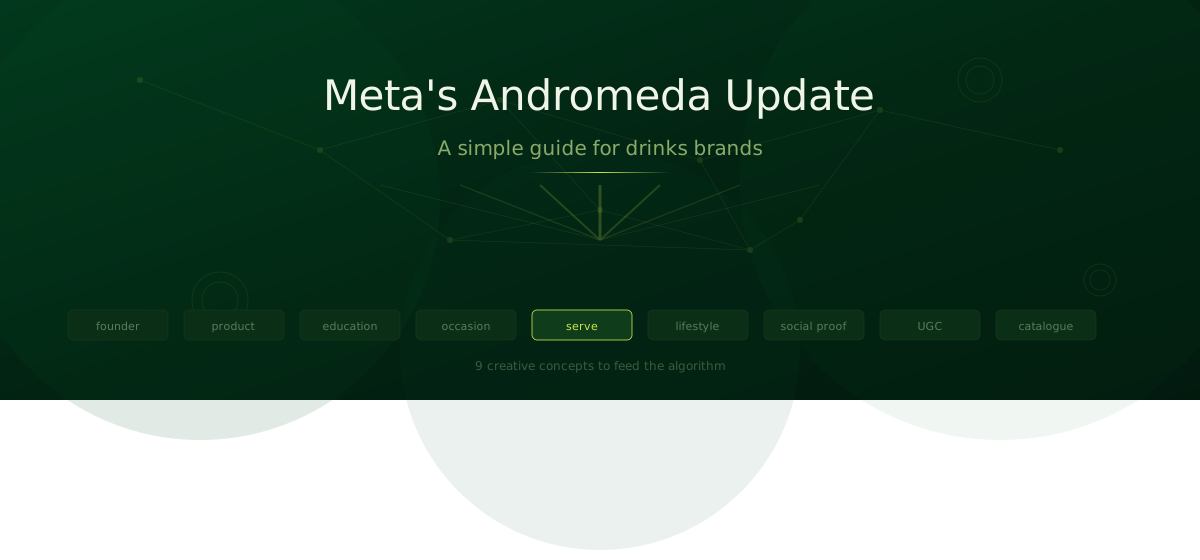
Cold Audience Creative: 8 to 12 Concepts
Your prospecting ad set is where creative diversity matters most. These people don't know you yet, so you're trying to give Andromeda a range of hooks to match different people with different motivations. Aim for 8 to 12 genuinely distinct concepts:
1. The Founder / Brand Story
Why does this product exist? What's the mission? A short clip of the founder talking about the brand, or a behind-the-scenes look at the team. This works especially well for challenger brands trying to stand out against bigger players.
2. The Product Story
Your liquid, your process, your ingredients. What makes the drink itself special? Think close-up pours, ingredient sourcing, production craft. Let the product do the talking.
3. Education / Myth-Busting
"What actually is a non-alc spirit?" or "Why does single malt cost more?" Content that teaches while selling. Bold claims work well here too: "You won't believe this isn't gin" or "Zero sugar, full flavour."
4. The Occasion
When and where does someone reach for your product? A Friday night in, a summer BBQ, a dinner party, a quiet midweek moment. Each occasion is a separate creative angle, so don't bundle them all into one ad.
5. The Serve
How do you drink it? Simple serves, cocktail recipes, food pairings. Each one is its own creative concept. A G&T serve is a completely different angle to an espresso martini twist.
6. Lifestyle
Who drinks this? Aspirational but authentic lifestyle content that reflects your target drinker's world, without necessarily showing the product front and centre.
7. Social Proof
Press coverage, awards, customer reviews, influencer mentions. Let someone else do the talking. Instant credibility for someone who has never heard of you.
8. UGC-Style Content
User-generated or influencer content that feels less like an ad and more like a recommendation. This format consistently outperforms polished brand content in cold audiences.
9. Dynamic Product Ads (Catalogue Ads)
If you have a product catalogue set up (which most Shopify brands will), Meta can now serve dynamic product ads to cold audiences too, not just retargeting. The algorithm picks which product from your catalogue to show each person based on their behaviour and interests. This works best when you have a decent range of SKUs (different flavours, formats, gift sets). You're not designing this creative from scratch, but you can still influence how it looks with frames, overlays, and copy templates. Make sure your product imagery is strong, your titles are clean, and your pricing is accurate, because that is the creative quality for catalogue ads.
The key is that each one of these should feel like a completely different ad, not a variation on a theme. Different visuals, different hooks, different tone. That's what Andromeda needs to work with.
Retargeting Creative: 4 to 6 Concepts
Your retargeting ad set speaks to people who already know you (website visitors, add-to-carts, past purchasers). The job here is different. You're overcoming the last bit of hesitation and nudging them to buy. The creative pool can be smaller, but more focused:
1. Social Proof
Customer reviews, star ratings, "over 10,000 sold." Reassurance for someone who's on the fence.
2. Offers and Bundles
Free delivery, multipack savings, gift sets. Give them a reason to act now rather than later.
3. The Reminder
A simple, clean product shot with a direct CTA like "Still thinking about it?" or "Your basket is waiting." Straightforward and effective.
4. Food Pairing or Recipe Content
Give them a reason to buy now. "Perfect with Sunday roast" or "Three cocktails you can make in under a minute."
5. The Gifting Angle
"Not sure what to get them?" Works well if you have gift-ready packaging, especially around key gifting periods like Christmas, Father's Day, or Valentine's Day.
6. Dynamic Product Ads (Catalogue Ads)
This is arguably your strongest retargeting format. If you have a product catalogue connected, dynamic ads will show people the exact products they've already viewed or added to basket. They work alongside your manually created retargeting creative, not instead of it. The DPA handles the "here's what you looked at" job, while your other retargeting concepts handle the broader persuasion. As with prospecting, make sure your feed is in good shape: strong imagery, accurate pricing, and clean product titles all make a difference.
The retargeting creative should feel warmer and more familiar. They've already seen the brand, so you don't need to introduce yourself again. It's about reassurance and a gentle push.
The mistake most brands make is running the same creative across both audiences. If someone saw your founder story in prospecting and then gets served the exact same ad in retargeting, that's a wasted touchpoint.
How Many Personas Should You Target?
Under Andromeda, you're not manually targeting personas the way you used to. Instead, your creative acts as the targeting. Each distinct creative angle effectively speaks to a different persona, and Meta's AI matches it to the right person.
For most drinks brands, 3 to 5 core personas is the sweet spot. More than that and you'll struggle to produce enough quality creative to serve each one. Fewer than that and you're not giving the algorithm enough diversity to work with.
Here's an example for a premium non-alcoholic spirits brand:
How to Research Your Personas
You don't need expensive research tools. Here's a practical approach:
Mine your existing data. Look at your Shopify or website analytics. Who's actually buying? What pages do they visit before purchasing? What search terms bring them in? If you're running Meta Ads already, check Audience Insights for demographic and interest data on your converters.
Read your reviews. Customer reviews (on your site, Amazon, or Trustpilot) are a goldmine. Look for patterns in why people bought, who they bought for, and what they say they love. These are your creative angles spelled out for you.
Stalk the comments. Go through the comments on your own social posts and your competitors'. What questions do people ask? What objections come up? What language do they use? This gives you both persona insight and ad copy ideas.
Use Reddit and forums. Search for your category on Reddit (r/nonalcoholic, r/cocktails, r/whisky). Real, unfiltered opinions from real drinkers. Look for recurring themes, frustrations, and desires.
Talk to your retail partners. If you're in Waitrose, Ocado, or Sainsbury's, your buyer or account manager can tell you about shopper behaviour in the category. Who's buying, when, and what else goes in the basket.
Survey your existing customers. Even a simple post-purchase email asking "What made you try us?" and "Who else would love this?" gives you persona data straight from the source.
Refreshing Your Creative
Under Andromeda, ad fatigue happens faster. Even your best performers will start to decline after 2 to 4 weeks. Plan for a fortnightly or monthly creative refresh cycle.
This doesn't mean starting from scratch every two weeks. It means having a rolling pipeline where you're always introducing a couple of new concepts while retiring the ones that have fatigued. Keep an eye on these signals:
- Rising CPMs mean your creative is getting stale
- High Creative Similarity score (a new Meta metric) means you need more diversity
- Declining CTR means people have seen it too many times
The Bottom Line
Andromeda rewards brands that think like content creators, not just advertisers. For drinks brands, this means moving beyond the bottle shot and building a diverse creative library that speaks to different people, different occasions, and different motivations.
The brands that adapt early will see lower costs and better returns. The ones that keep running the same three ads will wonder why their CPMs keep climbing.
Start with your personas, build your creative angles, keep the pipeline fresh, and let Meta's AI do the matching. That's the game now.
Why LTV Is the Metric That Matters for UK Drinks Brands Selling Online
For UK drinks brands growing DTC, performance marketing can feel like a bit of a minefield.
Rising ad costs, tougher competition, and changing customer behaviours make it harder than ever to drive a profitable first purchase.
But there’s one metric that can shift how you think about acquisition entirely: LTV — customer lifetime value.
📈 What is LTV, and why does it matter?
LTV is the total revenue you can expect from a customer over their full relationship with your brand.
For drinks brands — especially those with higher price points or solid repeat potential — LTV needs to sit at the heart of your strategy. Because while your CPA (cost per acquisition) might look high at first glance, it quickly becomes justifiable when a chunk of those customers are coming back for more.
🔁 When acquisition meets retention
Here’s where it gets interesting.
Let’s say your average order value is £40, and your CPA is also £40. Looks break-even, right?
But if even 40% of those customers reorder within 60 days, you’re not breaking even — you’re building long-term value.
For example:
• A customer orders 4 times in a year
• Total revenue: £160
• CPA: £40
• That’s a 4:1 return over 12 months
That’s the kind of model drinks brands should be building toward — not just looking at ROAS on day one.
🛒 The challenge: more distribution = less direct conversion
This is a common one.
As your brand grows into retail — whether that’s supermarkets, the on-trade, or Amazon — your DTC conversion rate often dips.
Why? Because your ads are now doing more than converting. They’re building awareness.
A customer might click your ad today, spot your bottle in Sainsbury’s tomorrow, and buy it on Amazon next week. The sale still happens — just not on your site.
🧠 What that means for your acquisition strategy
This is where brands often pull the plug too early. They pause paid social or search because ROAS looks weak, without realising they’re also driving offline or third-party sales they’re not tracking.
A strong approach to acquisition should:
• Optimise for first purchase and lifetime value
• Use email/SMS flows to drive repeat orders
• Factor in awareness and omni-channel impact
If you’re judging performance purely on in-platform ROAS, you’re missing half the picture.
🔍 How to actually measure LTV
There are plenty of tools that make this easy — Lifetimely, Triple Whale, or even basic cohort reporting in GA4 or Shopify.
Track:
• Average number of orders per customer
• Time between purchases
• Revenue by cohort
Then compare that against CPA to figure out your break-even point and ideal payback window. For most drinks brands, a 60–90 day payback is a solid benchmark.
🐾 What we recommend at Hound
We work with some of the UK’s fastest-growing drinks brands, and we always say:
• Set your LTV benchmarks early — don’t wait until you’re deep into Meta or Google spend.
• Test your retention levers — things like subscription nudges, reorder flows, or bundle offers often move the needle quickly.
• Understand your halo effect — model the impact your DTC activity is having on retail and Amazon. Because it’s rarely just one channel doing all the work.
🚀 Final thoughts
Paid acquisition for drinks brands has never been just about ROAS on day one. It’s about trial, awareness, loyalty — and ultimately, long-term growth.
When you put LTV at the centre of your thinking, everything gets easier. Suddenly, that high CPA doesn’t look so scary — it looks like a growth engine.
Want to dig into your LTV, retention, or acquisition model?
We help premium drinks brands build strategies that drive performance across both DTC and retail.
Get in touch — we’d love to chat.

The Creative Sweet Spot: Match Your Meta Ads Budget to the Right Number of Creatives
When it comes to scaling Meta Ads (formerly Facebook Ads), one of the most common bottlenecks is creative fatigue. You’re increasing budget, reaching wider audiences, and suddenly, your performance dips. The culprit? Not enough fresh creatives.
In this post, we’ll explore the relationship between ad spend and the volume of creatives you need to keep performance optimised. Whether you’re spending £1,000 or £50,000 a month, understanding this dynamic is key to maintaining ROAS and scaling sustainably.
📉 What Is Creative Fatigue?
Creative fatigue happens when your audience has seen your ads too many times. Engagement drops, CPAs rise, and Meta starts penalising your ad score. The result? Less efficient delivery and higher costs. This fatigue sets in faster at higher budgets due to increased impressions.
💡 Rule of Thumb: Creative Volume by Budget
While there’s no one-size-fits-all formula, a commonly used benchmark is:
For every £1,000 in monthly ad spend, aim for 2-4 new creatives.
This isn’t just a nice-to-have. It’s a survival tactic for keeping CPMs low, engagement high, and your campaigns scaling without stalling.

👉 Why the range? It depends on your funnel structure (TOF/MOF/BOF), audience size, and whether you’re testing formats or iterating on winning concepts.
📊 Format Diversity Matters
Meta’s algorithm rewards variety. Don’t just rotate stills. Include:
- Video (1:1 and 9:16 for Reels)
- Carousels
- UGC-style testimonials
- Branded animations
- Product-focused stills with clear CTAs
A healthy mix = more data = faster optimisation.
📆 How Often Should You Refresh?
At higher spends, fatigue can set in within 7–14 days. For smaller budgets, you may get 3–4 weeks out of a single creative. Track frequency and engagement rate per ad to know when it’s time to rotate.
📈 Plan Ahead
Creative pipelines need to match your spend ambitions. If you plan to scale, build creative production into your growth model. It’s not enough to have one hero ad anymore.
Summary
If you’re managing Meta ad spend without scaling your creative output, you’re leaving money on the table. Use your budget as a trigger for how many creatives you need—then track fatigue, test format diversity, and keep that pipeline flowing.
Meta rewards momentum. Give it the creative fuel to keep running.

How to Fix Your CPA Without Just Blaming the Ads: Focus on CTR and CRO
If your Cost Per Acquisition (CPA) is creeping up, is first instinct might be to dive into campaign settings, fiddle with audience targeting, or blame Meta’s algorithm? Then hold fire...
Here’s the truth most performance marketers learn the hard way:
👉 Your CPA isn’t just a media buying problem—it’s a full funnel problem.
Yes, your ads matter. But even the best-targeted campaign can’t make up for poor click-through rates (CTR) or a leaky website funnel.
In this post, we’ll break down how you can lower your CPA by improving two of the most overlooked—but critical—metrics:
CTR (Click-Through Rate) and CRO (Conversion Rate Optimisation).
🖱️ 1. Improve Your CTR: Make More People Click
Your Click-Through Rate (CTR) is the percentage of people who see your ad and actually click it. The higher it is, the more efficiently Meta can deliver your ads—and the lower your CPA.
Why CTR Impacts CPA
Meta’s algorithm rewards ads that generate engagement. A high CTR means:
- Lower CPC (Cost Per Click)
- Faster learning phase
- Better placement in auctions
If your CTR is low (under 1%), your ad isn’t resonating with your audience. And every click costs more.
How to Increase CTR
- Hook with a problem: Start your ad with a tension point your audience feels. E.g., “Sick of paying £40 for average wine?”
- Use short, sharp copy: Get to the value in 2 lines or less.
- Feature the product visually: Don’t rely on mood shots—show what you're selling.
- Test weekly: Creative fatigue sets in fast. Brands that refresh ads every 1–2 weeks often outperform those that don’t.
Real-World Example (Drinks Brand)
A kombucha brand we worked with increased CTR from 0.6% to 1.4% just by switching from generic lifestyle imagery to close-up pour shots and punchier headlines. CPA dropped by 32% without touching budget or targeting.
📈 2. Optimise CRO: Make More People Buy
Once someone clicks, the battle’s only half won. If your website doesn’t convert, you’re paying for traffic that goes nowhere.
This is where Conversion Rate Optimisation (CRO) comes in. Small tweaks to your site can have a huge impact on performance—and your CPA.
Why CRO Impacts CPA
If your site converts at 1% and you spend £1,000 on traffic, you’ll get 10 customers.
If it converts at 2%, that same £1,000 gets you 20 customers.
Your CPA just halved—without changing a thing in Ads Manager.
How to Improve Conversion Rate
- Optimise your checkout flow: Fewer steps, faster load times, no surprise costs.
- Make your CTA crystal clear: “Shop now” beats “Learn more” if you want action.
- Display trust signals: Reviews, delivery times, payment security badges.
- Mobile-first UX: Over 80% of traffic comes from mobile—test on your phone first.
Real-World Example (DTC Alcohol Brand)
A wine brand reduced their checkout from 5 steps to 2 and added delivery clarity above the fold. Their site-wide conversion rate rose from 1.6% to 2.4%, cutting CPA by 28% while keeping ad spend steady.
🔧 Fixing CPA is About the Funnel, Not Just the Ads
So, if your acquisition costs are on the rise, don’t just tinker with bidding strategies or blame Meta’s targeting.
✅ Audit your CTR: Are your ads thumb-stopping?
✅ Audit your CRO: Does your site remove friction and build trust?
Get both working together, and your CPA will drop—even without increasing budget.
Final Thoughts
Reducing CPA isn’t about squeezing more from your ads—it’s about getting more from the journey after the click. High CTRs bring people in efficiently. High conversion rates make sure they don’t bounce.
Whether you're a DTC drinks brand, skincare startup, or subscription box business, the takeaway is the same:
Fix the full funnel, and the ads will follow.

How to Grant Your Agency Access to Meta, Google, Shopify, Klaviyo & More
If you’re working with a digital agency to run ads, manage emails, optimise your store, or report on performance, they’ll need access to the right platforms. That means connecting them to your Meta Business Manager, Google Ads, Shopify, Klaviyo, and more.
This guide explains exactly the tech stack that we at Hound typically require access to, covering how to grant the right permissions across each platform, including Facebook Ads, Instagram, Pixel, Google Merchant Centre, and how to find your Shopify collaborator code.
Each section includes a link to the official help article so you can dive deeper if needed.
🔵 Meta (Facebook & Instagram)
Your agency will need access to your Meta Business Manager in order to manage your ad account, pixel, catalogue, Facebook Page and Instagram account.
1. Add Your Agency to Your Meta Business Manager
🔗 Meta Help Guide – Add a Partner to Business Manager
Steps:
1. Go to business.facebook.com
2. Click Business Settings
3. Under Users > Partners, click Add
4. Enter your agency’s Business ID (ask them for this)
5. Select the assets (Ad Account, Facebook Page, Pixel, Catalogue)
6. Grant full access to each
2. Connect Your Instagram Account
🔗 Meta Help Guide – Connect Instagram to Business Manager
Steps:
1. Go to Business Settings > Accounts > Instagram Accounts
2. Click Add and log into your Instagram account
3. Assign it to your Business Manager
4. Under Partners, grant your agency access
🟢 Google
From managing ads to product feeds and analytics, your agency will need access to several Google platforms.
3. Grant Access to Google Ads
🔗 Google Ads Help – Grant Account Access
Steps:
1. Go to ads.google.com
2. Click Tools & Settings > Access and Security
3. Add users by email address, and the relevant level of access. Generally admin is best for an agency, as there will be things they need access to to set up tracking
4. Share Access to Google Analytics
🔗 GA4 Help – Add Users to Google Analytics
Steps:
1. Go to analytics.google.com
2. Select your GA4 property
3. Click Admin > Property Access Management
4. Click + > Add Users
5. Enter your agency’s email and assign Editor permissions
5. Grant Access to Google Merchant Centre
🔗 Merchant Centre Help – Add Users
Steps:
1. Go to merchants.google.com
2. Click the tools icon > Account Access
3. Click the blue + button
4. Add your agency’s email and choose “Standard” or “Admin” access
5. Click Add User
🛍️ Shopify
6. Add Your Agency as a Collaborator
Your agency needs to be added as a collaborator (not a staff account). Your agency will need your Shopify Partner Request Code to send the request.
🔗 Shopify Help – Send Collaborator Access
Steps:
1. Log into your Shopify Admin
2. Go to Settings > Users and Permissions
3. Scroll to the Collaborator Request Code section
4. Click Create a Code (or copy the existing one)
5. Send this code to your agency
6. Approve the request when prompted via email or in Shopify
✅ Collaborators do not count toward your staff account limit.
✉️ Klaviyo
7. Grant Access to Your Klaviyo Account
Steps:
1. Go to klaviyo.com
2. Click your account name (bottom left) > Account
3. Navigate to Settings > Users
4. Click Add User
5. Enter your agency’s email
6. Assign Admin or Manager permissions
✅ Final Thoughts
Providing your agency with the right access is the first step to getting campaigns live, improving performance, and tracking results. Following these steps ensures smooth setup across Meta, Google, Shopify and Klaviyo — and gets your growth engine running faster.
Still stuck? Just send your agency this article — or reach out directly and they’ll guide you through the rest.