5 min read

For UK drinks brands growing DTC, performance marketing can feel like a bit of a minefield.

Rising ad costs, tougher competition, and changing customer behaviours make it harder than ever to drive a profitable first purchase.

But there’s one metric that can shift how you think about acquisition entirely: LTV — customer lifetime value.

📈 What is LTV, and why does it matter?

LTV is the total revenue you can expect from a customer over their full relationship with your brand.

For drinks brands — especially those with higher price points or solid repeat potential — LTV needs to sit at the heart of your strategy. Because while your CPA (cost per acquisition) might look high at first glance, it quickly becomes justifiable when a chunk of those customers are coming back for more.

🔁 When acquisition meets retention

Here’s where it gets interesting.

Let’s say your average order value is £40, and your CPA is also £40. Looks break-even, right?

But if even 40% of those customers reorder within 60 days, you’re not breaking even — you’re building long-term value.

For example:

• A customer orders 4 times in a year

• Total revenue: £160

• CPA: £40

• That’s a 4:1 return over 12 months

That’s the kind of model drinks brands should be building toward — not just looking at ROAS on day one.

🛒 The challenge: more distribution = less direct conversion

This is a common one.

As your brand grows into retail — whether that’s supermarkets, the on-trade, or Amazon — your DTC conversion rate often dips.

Why? Because your ads are now doing more than converting. They’re building awareness.

A customer might click your ad today, spot your bottle in Sainsbury’s tomorrow, and buy it on Amazon next week. The sale still happens — just not on your site.

🧠 What that means for your acquisition strategy

This is where brands often pull the plug too early. They pause paid social or search because ROAS looks weak, without realising they’re also driving offline or third-party sales they’re not tracking.

A strong approach to acquisition should:

• Optimise for first purchase and lifetime value

• Use email/SMS flows to drive repeat orders

• Factor in awareness and omni-channel impact

If you’re judging performance purely on in-platform ROAS, you’re missing half the picture.

🔍 How to actually measure LTV

There are plenty of tools that make this easy — Lifetimely, Triple Whale, or even basic cohort reporting in GA4 or Shopify.

Track:

• Average number of orders per customer

• Time between purchases

• Revenue by cohort

Then compare that against CPA to figure out your break-even point and ideal payback window. For most drinks brands, a 60–90 day payback is a solid benchmark.

🐾 What we recommend at Hound

We work with some of the UK’s fastest-growing drinks brands, and we always say:

Set your LTV benchmarks early — don’t wait until you’re deep into Meta or Google spend.

Test your retention levers — things like subscription nudges, reorder flows, or bundle offers often move the needle quickly.

Understand your halo effect — model the impact your DTC activity is having on retail and Amazon. Because it’s rarely just one channel doing all the work.

🚀 Final thoughts

Paid acquisition for drinks brands has never been just about ROAS on day one. It’s about trial, awareness, loyalty — and ultimately, long-term growth.

When you put LTV at the centre of your thinking, everything gets easier. Suddenly, that high CPA doesn’t look so scary — it looks like a growth engine.

Want to dig into your LTV, retention, or acquisition model?

We help premium drinks brands build strategies that drive performance across both DTC and retail.

Get in touch — we’d love to chat.

Why LTV Is the Metric That Matters for UK Drinks Brands Selling Online

Written by
Alex Russell
Published on
February 24, 2026
Copy link

For UK drinks brands growing DTC, performance marketing can feel like a bit of a minefield.

Rising ad costs, tougher competition, and changing customer behaviours make it harder than ever to drive a profitable first purchase.

But there’s one metric that can shift how you think about acquisition entirely: LTV — customer lifetime value.

📈 What is LTV, and why does it matter?

LTV is the total revenue you can expect from a customer over their full relationship with your brand.

For drinks brands — especially those with higher price points or solid repeat potential — LTV needs to sit at the heart of your strategy. Because while your CPA (cost per acquisition) might look high at first glance, it quickly becomes justifiable when a chunk of those customers are coming back for more.

🔁 When acquisition meets retention

Here’s where it gets interesting.

Let’s say your average order value is £40, and your CPA is also £40. Looks break-even, right?

But if even 40% of those customers reorder within 60 days, you’re not breaking even — you’re building long-term value.

For example:

• A customer orders 4 times in a year

• Total revenue: £160

• CPA: £40

• That’s a 4:1 return over 12 months

That’s the kind of model drinks brands should be building toward — not just looking at ROAS on day one.

🛒 The challenge: more distribution = less direct conversion

This is a common one.

As your brand grows into retail — whether that’s supermarkets, the on-trade, or Amazon — your DTC conversion rate often dips.

Why? Because your ads are now doing more than converting. They’re building awareness.

A customer might click your ad today, spot your bottle in Sainsbury’s tomorrow, and buy it on Amazon next week. The sale still happens — just not on your site.

🧠 What that means for your acquisition strategy

This is where brands often pull the plug too early. They pause paid social or search because ROAS looks weak, without realising they’re also driving offline or third-party sales they’re not tracking.

A strong approach to acquisition should:

• Optimise for first purchase and lifetime value

• Use email/SMS flows to drive repeat orders

• Factor in awareness and omni-channel impact

If you’re judging performance purely on in-platform ROAS, you’re missing half the picture.

🔍 How to actually measure LTV

There are plenty of tools that make this easy — Lifetimely, Triple Whale, or even basic cohort reporting in GA4 or Shopify.

Track:

• Average number of orders per customer

• Time between purchases

• Revenue by cohort

Then compare that against CPA to figure out your break-even point and ideal payback window. For most drinks brands, a 60–90 day payback is a solid benchmark.

🐾 What we recommend at Hound

We work with some of the UK’s fastest-growing drinks brands, and we always say:

Set your LTV benchmarks early — don’t wait until you’re deep into Meta or Google spend.

Test your retention levers — things like subscription nudges, reorder flows, or bundle offers often move the needle quickly.

Understand your halo effect — model the impact your DTC activity is having on retail and Amazon. Because it’s rarely just one channel doing all the work.

🚀 Final thoughts

Paid acquisition for drinks brands has never been just about ROAS on day one. It’s about trial, awareness, loyalty — and ultimately, long-term growth.

When you put LTV at the centre of your thinking, everything gets easier. Suddenly, that high CPA doesn’t look so scary — it looks like a growth engine.

Want to dig into your LTV, retention, or acquisition model?

We help premium drinks brands build strategies that drive performance across both DTC and retail.

Get in touch — we’d love to chat.

Let's build something together.

Let's build something together.

We partner with a handful of drinks brands ready to grow.
Drop us a message — we’d love to hear what you’re building.

Related posts

5 min read

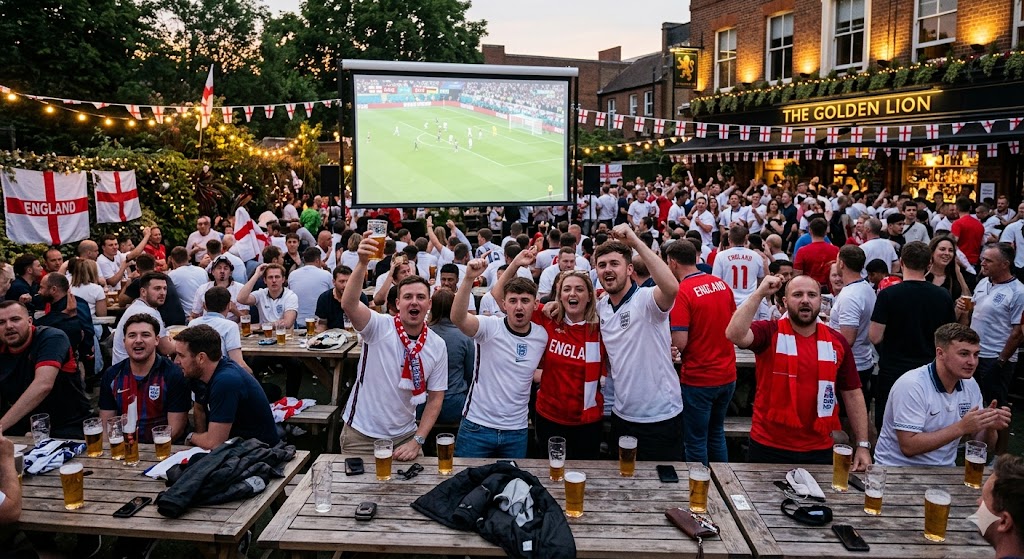
Pints In. It's Coming Home (Maybe). Here's What the World Cup Actually Does to Drink Sales.

Read more

The FIFA World Cup kicks off in two days. England's first game is Wednesday 17th June against Croatia - 9pm UK time, a warm summer evening, revenge narrative built in. If you work in drinks marketing and you're not thinking about this right now, you should be.

But before you dust off the 2018 playbook and call it a strategy, it's worth understanding what the data actually says about World Cup uplifts, which categories win, and what's genuinely different about this tournament.

📅 England's Schedule Is Better Than You'd Think

The fear with a US-hosted tournament was brutal West Coast kick-offs landing at 2am UK time. The reality is more manageable.

England's group stage looks like this:

  • Wednesday 17 June - England vs Croatia, 9pm UK
  • Tuesday 23 June - England vs Ghana, 9pm UK
  • Friday 27 June - Panama vs England, 10pm UK

All three are evening kick-offs. All three are viable pub occasions. All three fall in the height of British summer. On paper, the conditions for a commercial uplift are genuinely good - not quite 2018, but closer to it than anyone was expecting when the tournament draw came out.

The caveat: if England progress deep into the knockout rounds and games shift to West Coast venues, later kick-offs become more likely. But for now, the group stage is workable.

🏆 What 2018 Actually Looked Like in the Data

Russia 2018 is the benchmark everyone in drinks references, and rightly so. England reached the semi-finals, most games kicked off between 3pm and 7pm UK time, and the summer was one of the hottest on record. Everything aligned.

The BBPA reported pub beer sales during England's run to the semi-finals were up 25-30% versus equivalent weeks. The England v Sweden quarter-final alone generated an estimated additional £30m in on-trade beer sales. The Croatia semi-final - a 7pm Wednesday kick-off on a warm evening - reportedly drove the highest single-night pub sales many venues had seen outside New Year's Eve.

Off-trade figures were equally strong. Nielsen data reported by the WSTA showed beer and cider volume running 20-25% above baseline during the tournament, concentrated in the weeks England were still competing. When England went out on 11th July, the uplift dropped almost immediately.

The key thing about 2018: the time zones were helpful, the weather was exceptional, and England went all the way to the semi-finals. You're not going to get all three of those again. But 2026 has a decent shot at two of them.

❄️ What 2022 Taught Us About Unusual Conditions

Qatar 2022 was a genuinely useful data point because it removed variables that are normally bundled together.

The winter tournament (November-December) killed the weather-driven occasion entirely. No garden viewing parties, no warm evenings, no impulse purchases on the way home from work in the sunshine. The on-trade saw lower footfall than a summer equivalent. Off-trade uplift was more modest.

But kick-off times were actually fine - 1pm, 4pm, 7pm and 10pm UK slots. What suppressed sales wasn't the viewing time. It was the cold weather stripping out the outdoor occasion that makes summer football so commercially powerful for drinks brands.

The WSTA reported overall alcohol sales up approximately 10-12% during the 2022 tournament - real uplift, but well below 2018, and driven by a different product mix. Wine and spirits held up because the occasion shifted to sofa-and-screen. Beer and cider underperformed because their occasion - outdoors, warm, social - simply wasn't there.

The takeaway: weather and football are two separate multipliers. When they stack, as they did in 2018, the commercial effect is extraordinary. When you get one without the other, the uplift is real but more modest.

☀️ 2026: Summer Football Is Back. Use It.

This tournament has what 2022 didn't - a summer backdrop. June and July in the UK, England playing evening games, outdoor occasions back on the table. For beer, cider, rosé, gin and premium soft drinks, the seasonal conditions alone are worth planning around, regardless of England's results.

The most commercially significant variable is still England's run. The 2018 data makes clear that the multiplier effect kicks in properly once England are in the knockout rounds and the nation is genuinely invested. A group stage exit changes the picture significantly - you'd be left with a decent summer and not much else.

The realistic uplift scenarios:

If England exit at the group stage: expect a modest 5-8% uplift across the tournament period, driven primarily by summer weather rather than football occasions. Category winners are rosé, white wine and gin - summer staples that don't need a sporting event.

If England reach the last 16 or quarters: 12-18% uplift on beer and cider, stronger cross-category performance, meaningful on-trade lift on match nights. This is the most likely outcome and the scenario worth planning your media around.

If England go deep - semis or final: the 2018 dynamic reasserts itself. You're looking at 20%+ uplift on beer and cider, a national conversation that touches every category, and the kind of demand surge that catches unprepared brands short on stock.

🍺 Category by Category

Beer and cider are the most directly World Cup-sensitive categories. The 9pm kick-offs are pub-viable and the summer conditions restore the outdoor occasion. If England progress, expect the strongest uplift of any category. If they don't, beer still benefits from the summer backdrop - just not the football premium on top.

Rosé and white wine will perform well regardless of England's results. These are summer categories driven more by warm evenings than sporting occasions. A 9pm kick-off that sends people to the pub garden is just as good a rosé moment as any other summer evening.

Gin follows a similar pattern - sunshine hours matter more than the scoreline. The premium long-serve occasion is alive in June and July whether England win or lose.

Spirits (darker) - whisky, rum, bourbon - show minimal World Cup correlation. They're not occasion-sensitive in the same way. Don't expect meaningful uplift and don't blow your budget trying to engineer it.

Non-alcoholic drinks are the interesting story this tournament. The category has grown substantially since 2018 and the consumer base is now large enough to generate real volume data. Non-alcoholic beer in particular tracks summer occasions almost as closely as its alcoholic equivalent. Someone watching England at the pub who isn't drinking alcohol is now almost certainly reaching for a Guinness 0.0 or a Peroni 0.0 rather than a soft drink - and that's a meaningful commercial shift from even four years ago. Non-alcoholic brands should be treating this tournament as a proper planning occasion, not an afterthought.

Soft drinks and energy drinks benefit from both the summer conditions and the viewing occasions. Consistent uplift expected across the tournament, accelerating if England progress and the national mood picks up.

📱 What DTC Brands Should Actually Do

The temptation is to build a big World Cup campaign and let it run. That's the wrong approach. The commercial opportunity is concentrated and predictable - match nights, warm weekends, England's knockout games if they get there - and the media strategy should match that concentration.

Match day is the buying window, not kick-off time. Someone who's watching a 9pm game has already bought their drinks by 6pm. The decision happens in the supermarket or online in the afternoon. Off-trade and DTC purchase activity spikes mid-afternoon on match days, not at 8:45pm. Time your media to the purchase moment, not the broadcast.

React to England's results in real time. Winning breeds buying. The morning after an England win, search intent and social engagement spike. Having reactive creative ready and budget available to deploy is worth more than any pre-planned campaign. Set up the trigger now so you can move fast when it matters.

Weight your spend to the games that matter. The Croatia opener on 17th June is the highest-value game of the group stage commercially - it's the one that sets the mood for the tournament, the one with the strongest media coverage, and the one where consumer intent to make it an occasion is highest. Back it accordingly.

Don't wait for knockout rounds to start planning. The brands that win commercially in tournaments are the ones who are already in consumers' consideration before the first ball is kicked. Get your creative live now.

🎯 The Honest Forecast

2026 isn't 2018. Don't plan as if it is. But it's a summer tournament with viable UK kick-off times and England in reasonable shape. The baseline conditions are genuinely positive.

The weather and the football are your two variables. You can't control either of them, but you can plan around both - and that planning is exactly what separates brands that capitalise on the next six weeks from the ones who look at their July numbers and wonder what happened.

5 min read

Why Facebook and Instagram Ads Will Never Be Cheaper Than They Are Now – Especially for Drinks Brands

If you’re marketing a drinks brand—whether that’s wine, spirits, mixers, or kombucha—there’s one uncomfortable truth you can’t afford to ignore. Facebook and Instagram ads will never be cheaper than they are today.
Read more

For anyone marketing a drinks brand—whether that’s wine, spirits, mixers, or kombucha—there’s one uncomfortable truth you can’t afford to ignore...

Facebook and Instagram ads will never be cheaper than they are today.

Over the past few years, the cost of reaching your ideal customer has risen steadily. And for the drinks industry, where competition is fierce and margins are tight, every penny counts.

Let’s break down why Meta advertising costs are climbing, how it affects drinks brands specifically, and why now is the time to double down on your strategy before it becomes even more expensive.

🎯 1. Interest Targeting is Being Removed—Hurting Niche Drinks Brands the Most

One of the big appeals of Meta advertising used to be precise interest targeting. You could reach gin lovers, wine subscribers, cocktail connoisseurs, or people interested in zero-alcohol alternatives with incredible accuracy.

But Meta has gradually removed hundreds of interest categories, especially those around alcohol, health, and lifestyle. If you're marketing something like:

  • A natural wine subscription
  • A low-calorie RTD cocktail
  • A functional sparkling tea

…you’ve probably noticed that your audience options have shrunk. Without granular targeting, it’s harder to reach cold audiences that actually care about your category.

This shift especially hurts early-stage brands who rely on interest targeting to build awareness. Instead, Meta is pushing everyone toward broader targeting, which often leads to higher CPAs and more wasted spend—unless you’ve got the budget to let the algorithm learn over time.

🍷 2. The Drinks Space is Getting Crowded on Meta

We’re seeing more and more drinks brands entering the paid social space, from craft spirits to challenger soft drinks. And they’re not just competing against each other—they’re up against food brands, fashion, tech, and beyond.

Because Meta operates on an auction-based system, this growing competition means:

  • CPMs (cost per 1,000 impressions) continue to rise.
  • You’re paying more just to get seen in-feed.
  • Smaller brands are being priced out of top-performing placements.

We’ve seen CPMs for drinks campaigns rise from £6–£8 in 2022 to £12–£16 in 2025, depending on the segment and creative format. That’s a 100%+ increase in just a few years.

If you're running an awareness campaign for a new flavoured gin or launching your canned spritz range for summer, you're likely paying significantly more to generate the same number of impressions than you would have 18 months ago.

📈 3. Year-on-Year Increases in CPMs Are the New Normal

For drinks brands, the average CPM is rising fast. Here’s what we’ve seen across our client base:

  • 2022: £6–£8 CPM for most alcohol and premium soft drink ads
  • 2023: £9–£12 CPM range became common
  • 2024–25: £12–£16 CPM, even higher in Q4

And that’s before you even get to key trading periods like Christmas or Dry January, when demand for ad space spikes.

Brands who wait until peak times to run ads—without already having tested creative and audiences—often find themselves paying 30–50% more per impression than competitors who planned earlier and locked in learnings.

🔐 4. Privacy Changes Make Attribution Harder (and More Expensive)

With iOS14+ and GDPR in full swing, drinks brands are now flying partially blind. Whether you're promoting a direct-to-consumer discovery box or a zero-sugar energy drink, it's harder to tell which ads are actually converting.

This means:

  • ROAS appears lower, making it harder to optimise
  • CPAs rise, as spend is spread more thinly across testing
  • Brands must invest in things like server-side tracking and Conversion APIs to get visibility back

In a high-volume, low-margin category like drinks, that’s a tough pill to swallow. Without accurate attribution, it’s easy to underinvest in ads that are actually working, or worse, over-invest in poor performers.

🚨 Why Drinks Brands Should Act Now

Here’s the thing—paid social still works for drinks. When done well, Facebook and Instagram ads can:

  • Grow your subscriber base
  • Drive DTC sales at scale
  • Launch new SKUs with speed and impact

But the window for low-cost testing is closing.

If you’re sitting on a product launch, planning to grow your DTC arm, or trying to hit subscription targets before your next funding round—now is the lowest cost it’s going to be.

🥡 Key Takeaways for Drinks Marketers

  • Don’t wait for CPMs to go back down—they won’t.
  • Start testing broad audiences and creative formats now while costs are still manageable.
  • Focus on building first-party data (email, SMS, pixel audiences) to protect future reach.
  • If you haven’t already, invest in conversion tracking upgrades (e.g., Meta's CAPI) to keep attribution strong.

Final Thought

As a drinks brand in the  digital world, you’re not just marketing a product—you’re battling against rising costs, limited targeting, and a crowded marketplace. But those who act now—who test, learn, and build an ad infrastructure while CPMs are still (relatively) low—will be the ones with the edge this time next year.

Because whether you’re pushing premium rum or functional soda, one thing’s for sure:

Facebook and Instagram ads will never be this low cost again.

5 min read

The Secret Sauce to Boosting Sales In Supermarkets

If you’re a drinks brand looking to grow sales through major grocery retailers, there’s one marketing channel you can’t afford to ignore.
Read more

If you’re a drinks brand looking to grow sales through major grocery retailers, there’s one marketing channel you can’t afford to ignore...

👉 Sponsored product ads on retail media platforms like Ocado, Waitrose, and Sainsbury’s (Nectar360).

These platforms allow your brand to appear in the exact moment a customer is searching for drinks, whether it’s sparkling wine, zero-alcohol beer, or premium mixers. And with the right setup, they can deliver serious performance: high-intent visibility, measurable returns, and full-funnel impact.

In this article, we’ll break down:

  • What sponsored product ads are
  • How they work across Waitrose, Ocado, and Sainsbury’s
  • Real CPC and ROAS benchmarks
  • Auction types and how they impact spend
  • Where you can and can’t bid on competitors
  • And how to build a strategy that drives measurable growth

🛒 What Are Sponsored Product Ads?

Sponsored product ads are pay-per-click (PPC) placements that show up within a retailer’s search results or category pages. Think of them as the Amazon ads of the grocery world: if someone searches “canned cocktails,” your brand appears first, even if you’re new to the shelf.

These aren’t static banners. They’re native, shoppable placements designed to drive product discovery, trial and repeat sales right in the moment of purchase intent.

🍷 Why They’re Essential for Drinks Brands

The drinks category is highly competitive. Whether you’re a heritage spirits brand or a challenger sparkling water company, your product is fighting for attention both online and in-store. And with grocery eCommerce growing year on year, your digital shelf presence is now just as important as your physical one.

Sponsored product ads help drinks brands:

  • Win visibility at the top of category and search results
  • Launch new products with immediate impact
  • Defend your brand against competitors
  • Cross-sell into relevant searches (e.g. tonics under “gin”)
  • Provide measurable sales attribution to commercial buyers

The best part? Unlike many trade marketing activities, you can see what’s working in near real-time, and optimise accordingly.

🏷️ Auction Types Explained: First-Price vs Second-Price

Not all retail media platforms operate the same way. Understanding the auction model is crucial to managing your spend effectively.

  • First-Price Auction: You pay exactly what you bid. So if you bid £1.00 per click and win, you pay £1.00.
  • Second-Price Auction: You only pay just above the next-highest bid. If you bid £1.00 and the next highest is £0.75, you’ll pay £0.76.

This has a big impact on efficiency. In first-price auctions, overbidding can quickly burn through budget. In second-price auctions, the system is slightly more forgiving, giving you room to stay competitive without overpaying.

🙋‍♂️ Can You Bid on Competitors?

Simply put, no. On Citrus Ads, you can't  bid on competitor brand terms or product keywords. This means your mixer brand wouldn't be able to appear above a rival when someone searches “Fever-Tree” or “San Pellegrino.”

However, on Nectar360 (used by Sainsbury’s), cross-selling is available, only when the other product can be viewed as complentary. i.e. omething that goes together,where there's a clear link between the two products. e.g. chips and tomato ketchup. HOWEVER, both brands need to not do their own versions of each others products. For instance, if Heinz did a range of chips, you coudln't cross-sell on them.

🛍️ Retail Media Comparison Table

Here’s how Waitrose, Ocado, and Sainsbury’s stack up for drinks brands running sponsored product ads:

Ocado vs Waitrose vs Sainsbury's Table
Ocado Waitrose Sainsbury’s
Min bid £0.40 £0.50 £0.45
Auction type 1st price (you pay your max bid) 2nd price (you pay the next best bid + 1p) 2nd price (you pay the next best bid + 1p)
Competitor bidding Not allowed Not allowed Not allowed. However cross-selling enables this to an extent (see below).
Cross selling rules Not allowed Not allowed Broad complementary allowance as long as it’s not a direct competitor. Can also cross sell against Sainsbury’s own brand. Alcohol rules: can advertise against non-competing alcohol, proteins suitable for meals (fish, ham), and standard mixers (tonic, ginger ale).
Health claims Not stated Allowed only if the claim is printed on packaging or included in verified nutritional info Not stated
Attribution window 14 days 21 days 14 days
Budget options Daily or total budget Total budget Total budget
Close Exact Match Recommend specifying plurals Recommend specifying plurals Yes (Close Exact Match enabled)
Typical ROAS 200 to 400%. Anything over 100% should be kept running. 200 to 400%. Anything over 100% should be kept running. 250 to 400%. Anything over 100% should be kept running.
Placements Aisle, Search Before You Go, Category, Grocery Landing, Offers, Search, Banner X Checkout Before You Go (Web & App), Cross Sell, Offers, PDP Similar Items, Search App, Search Below Grid, Zone, Banner, Banner X

🚨 When to Use Sponsored Product Ads

🎯 Product Launches
Get your NPD in front of relevant shoppers from day one.

🎯 Key Trading Periods
Boost performance during peak times—think Dry Jan, Summer, Gifting, or Christmas.

🎯 Brand Defence
Protect your name from competitor bids, especially on Citrus platforms.

🎯 Retailer Support
Demonstrate investment to buyers and help drive sell-through.

🔔 Best Practices to Maximise ROI

Mix branded and category campaigns
Don’t just protect your name - go after general searches like “sparkling wine” or “alcohol-free beer.”

Watch CPCs closely
First-price auctions mean it’s easy to overspend - monitor bids regularly and adjust for efficiency.

Iterate on targeting
Update keyword lists to stay relevant and outperform competitors.

Use retailer dashboards
Citrus Ads and Nectar360 provide detailed reporting. Use it to optimise placements and scale what works.

💭 Final Thoughts: Retail Media Is the New Shelf Space

Drinks brands have long fought for end caps, gondolas and eye-level space. Today, that battleground is digital, and sponsored product ads are the fast track to visibility.

Whether you’re looking to drive trials, defend your brand, or support listings with measurable performance, retail media on Ocado, Waitrose and Sainsbury’s is no longer a “nice to have.” It’s a growth essential.

The brands that learn these platforms now will win the long game, because if you’re not bidding on those high-intent searches…

Your competitors already are.